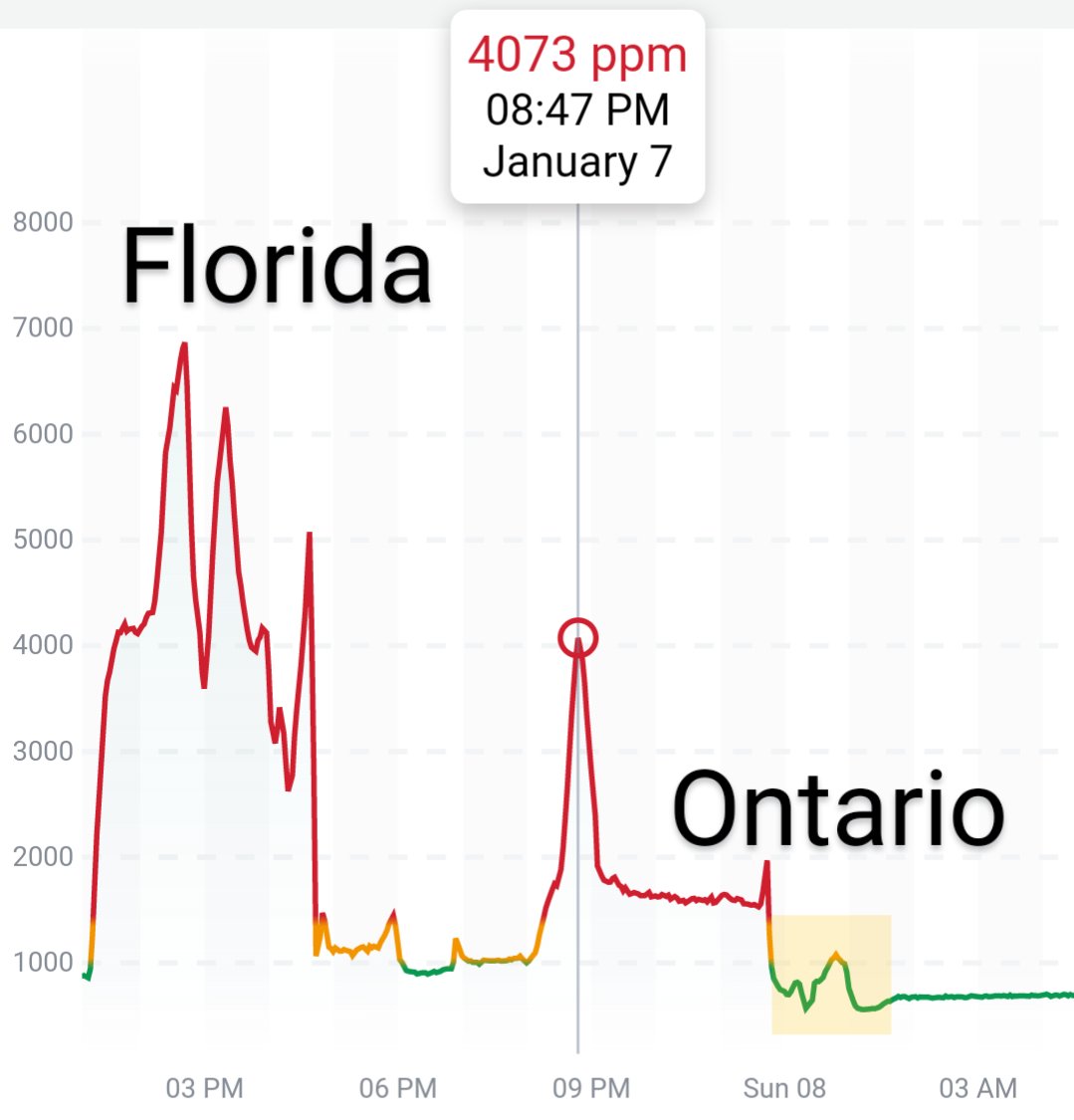
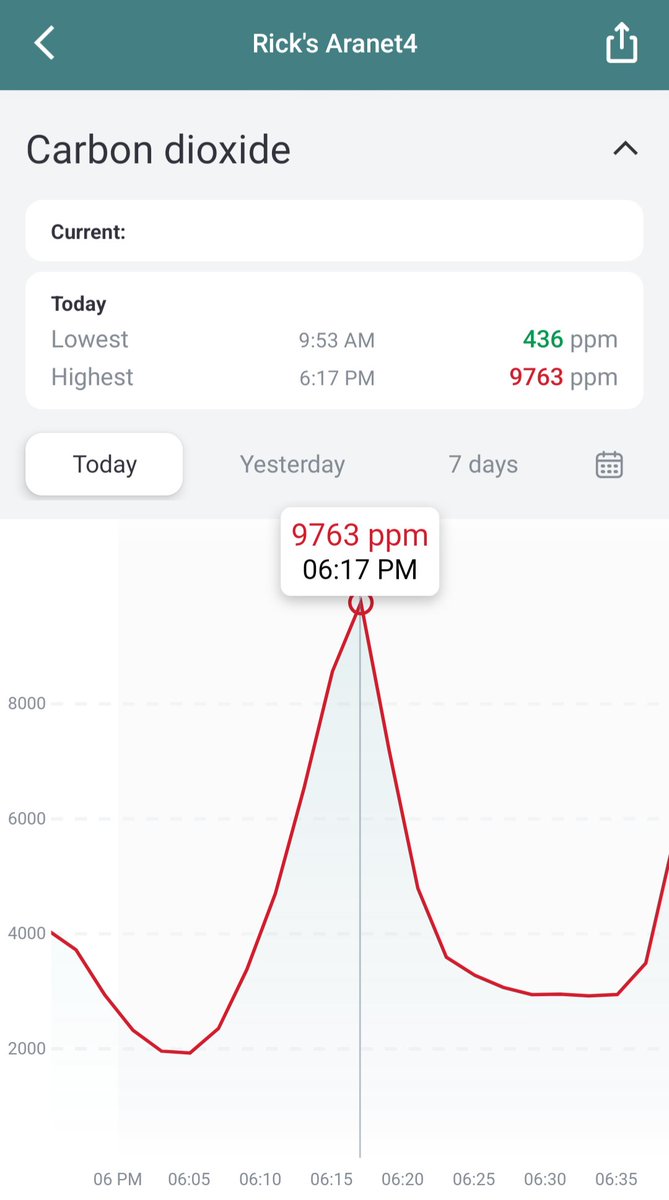
Can you guess what I was doing last night from this CO2 log?
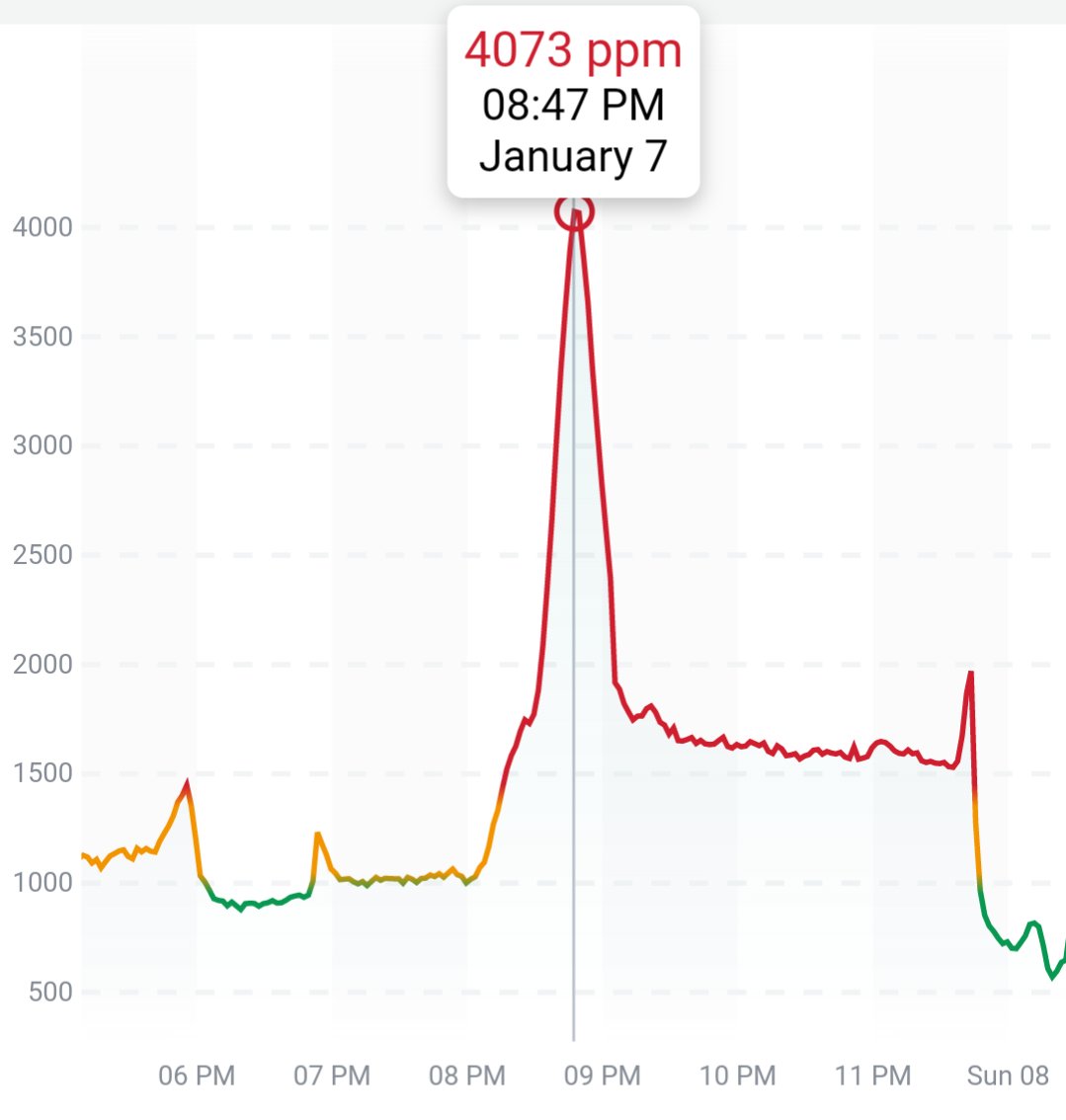
Can you guess what I was doing last night from this CO2 log?
There was a very sick kid in the seat behind my son, coughing and wiping her nose the whole flight. A flight attendant offered the Mom a mask for the child, but they didn’t wear it. I guess we’ll know in a few days if our N95s were good enough to protect us.
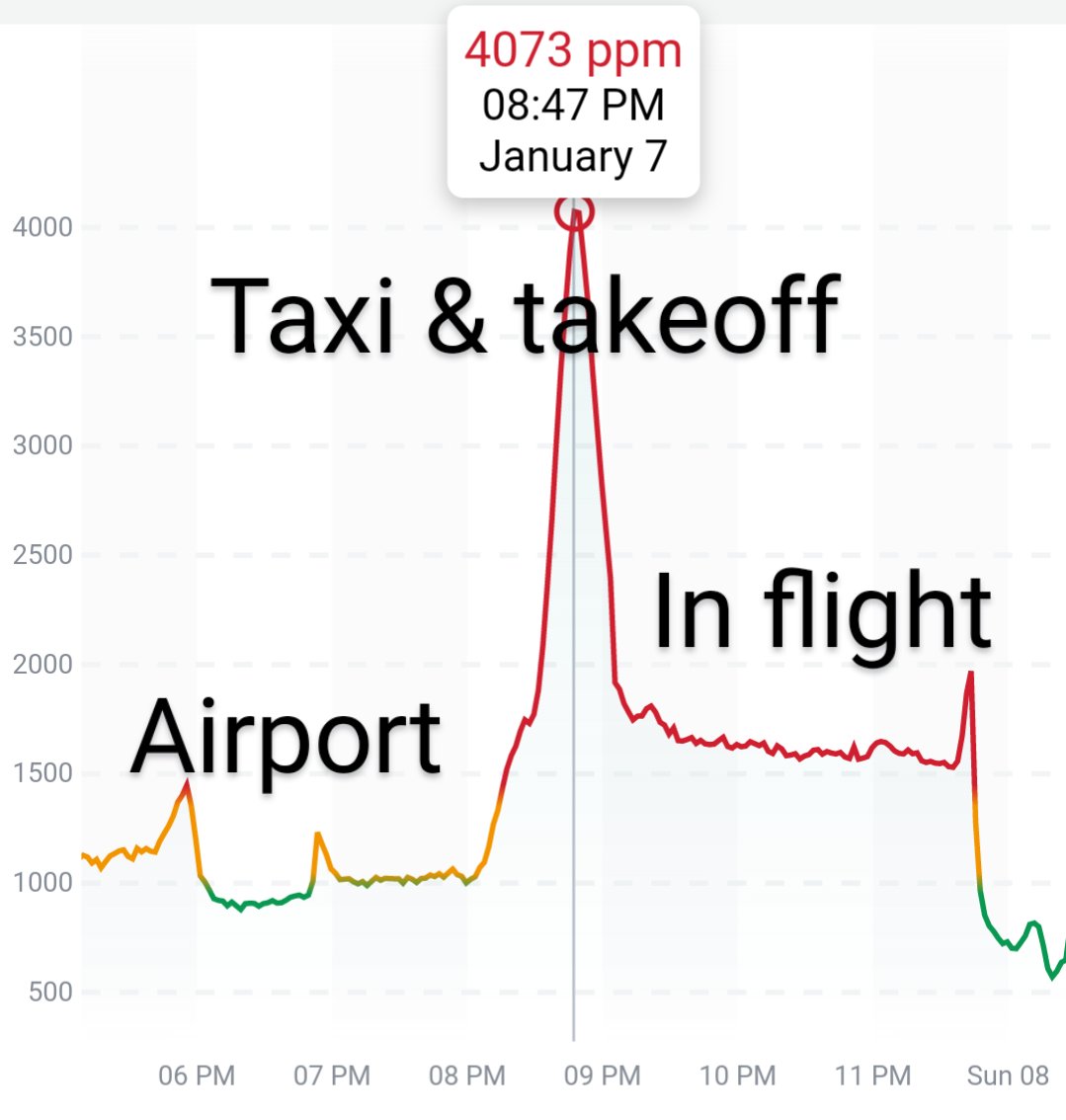
The times driving to and from the airports are also interesting. First driving in Florida with the AC on recirculate, then in Ontario with the heater on 🙂.
The dips in Florida correspond to when we got out of the car to do something, leaving the CO2 monitor in the car.
Once again, the regulatory environment in the USA and Canada means we are denied access to tools which empower Europeans in their own healthcare.
https://www.nbcnews.com/health/health-news/rapid-tests-covid-rsv-flu-are-available-europe-stopping-us-rcna64470
Measie: testing made easy and affordable for everyone by @BrusJulian https://link.medium.com/El7gyQXeqwb
It’s time to mandate clean air in all public indoor spaces.
Mandating clean drinking water seemed like a crazy idea only 150 years ago. People weren’t too concerned about their sewers and their drinking water mixing, can you imagine? That’s us today with air. https://x.com/AliNouriPhD/status/1611521113682546689
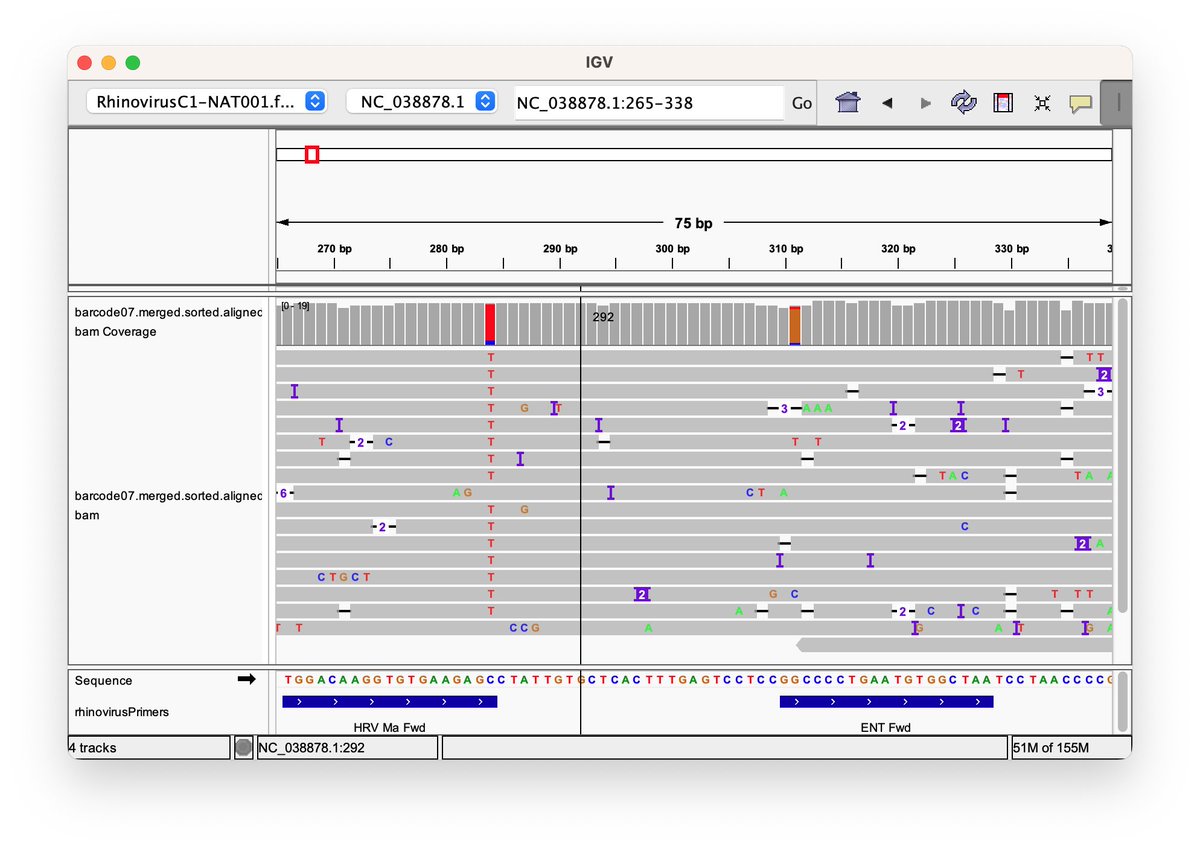
I finally found the cause of my qPCR virus tests failing for a recent cold virus I knew we had. Through sequencing, I learned my virus happened to have a novel C->T mutation right at the 3’ binding site of the “HRV Ma” primer I use!
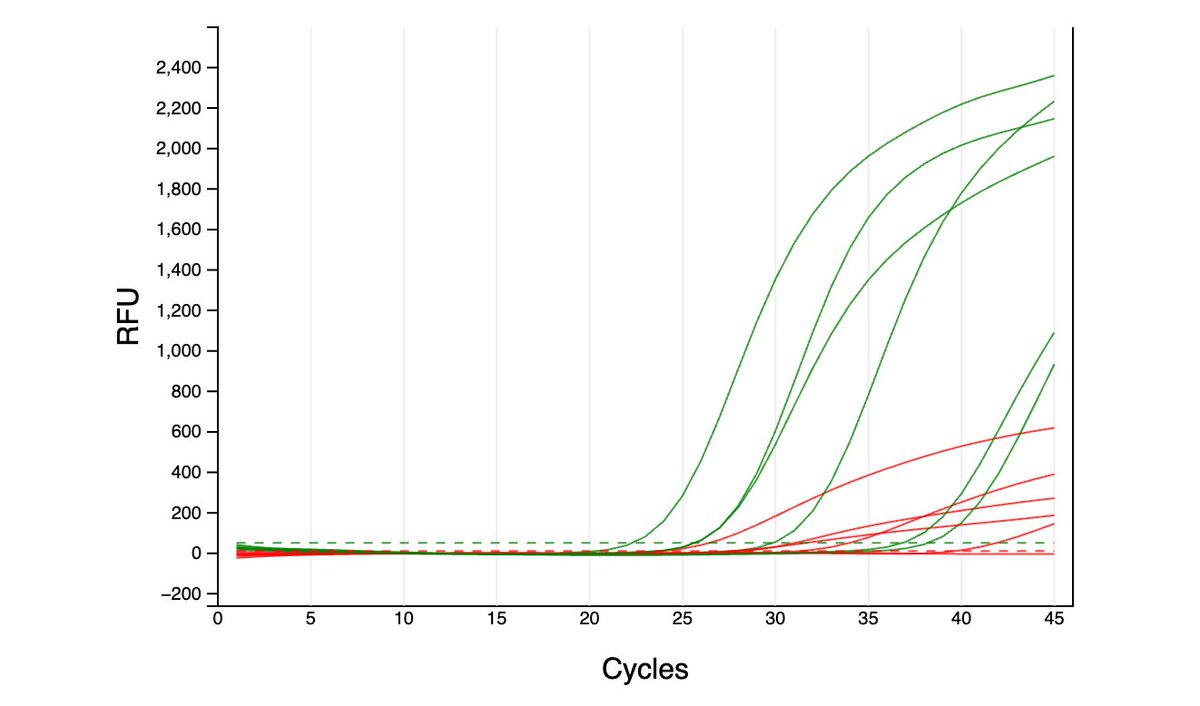
I’m seeing better (but, to be honest, still unsatisfying) results from the primer labeled “ENT” which is described in https://www.nature.com/articles/srep34855. qPCR plot, green lines HRV, red ENT.
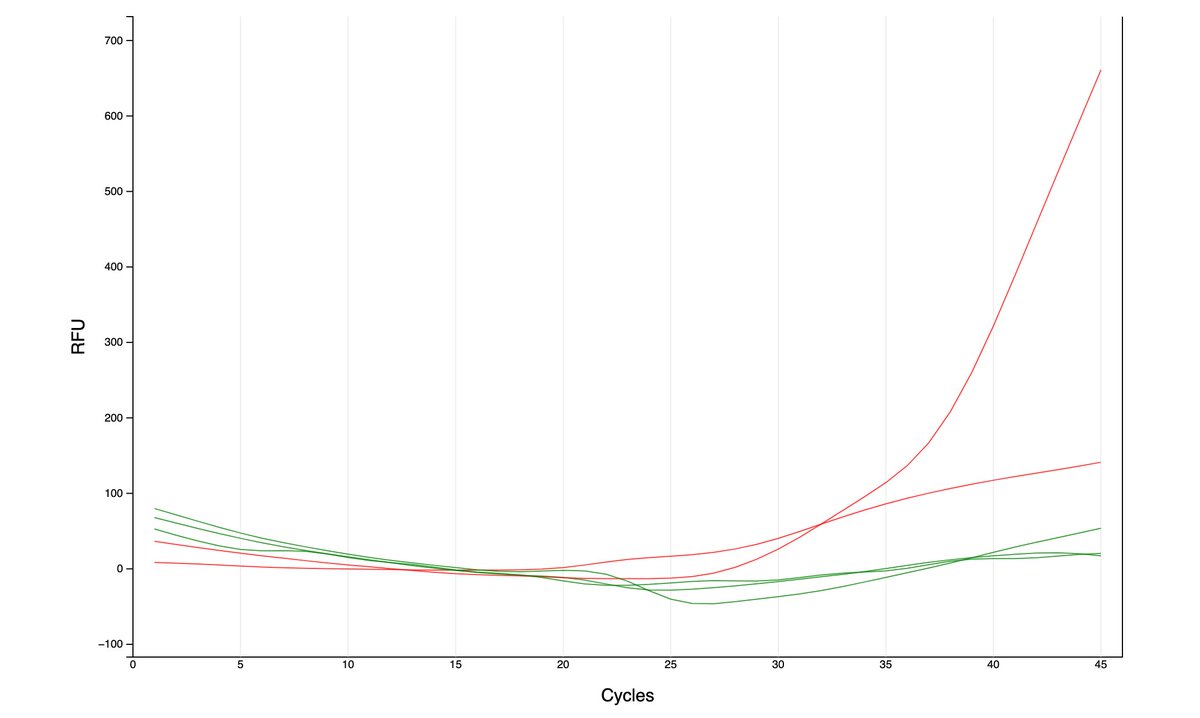
The different lines in the above plot are trying different primer/probe concentrations. I say the ENT results are unsatisfying because I really had to bump up my primer concentration (500nM to 1.5µM final), the ∆RFU is still too low (600 vs 2000), and plot misshapen.
Viruses I’ve sequenced from myself and son over the past 1.5 years:
10/6/2021 Rhinovirus A26
7/15/2022 SARS-CoV-2 BF.28
10/26/2022 Rhinovirus A56
11/12/2022 Rhinovirus C1
My son is sick again today, I wonder what it’ll be this time?
https://www.ncbi.nlm.nih.gov/projects/msaviewer/?anchor=0&coloring=diff&key=Y9D5CX_SoAsM_O4ML-3Y8ohdu47k_-r65vzO6truyMBZz-g4IgJMSOX40PhtFm9rPnNjZ31DJkZhXHVRc1d_TE1lcGtcV3Y,7V53h_FcLoWCcmCCoWNWfAbTNQ5qf2R6aHxAalRuRkDXT2a4rILDdyFBFNgnpFPZAsFf1UHxGvRd7knjT-VD_nHXTNlg5Uo&from=279&to=411&expand=0&columns=x:17,aln,pi:65,mm:70
Man, an experiment going almost exactly as you hoped is such a rush! Just like getting some tough coding finally working well but with delayed gratification 😀.
For the record: That’s 4 strongly Rhinovirus-positive samples, including my son’s latest cold.
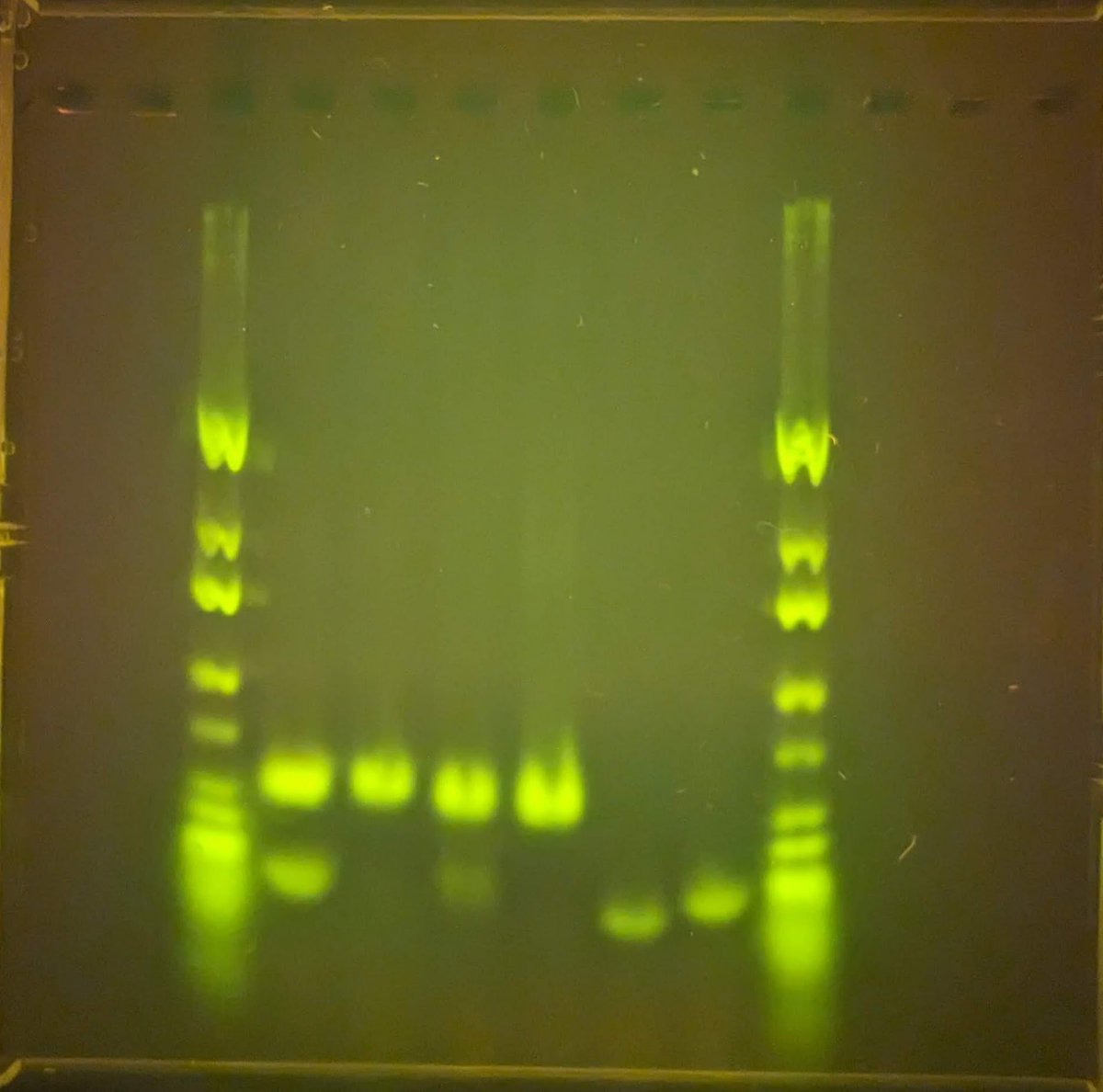
Scientists don’t talk enough about their failures. Trying to learn microbiology from published papers feels like observing the world through a pin hole!
2 years ago I struggled to make dye-based RT-PCR work reliably. I even contacted NEB tech support but they were convinced I had some contamination. I gave up and went to probes, which were expensive and somewhat masked the problem.
Today I learned using a 2-step RT solves all my off-target-amplification problems! It’s more work, but man 45 cycles out and my negative controls show nothing on my gel but primer. Beautiful! https://x.com/RickByersLab/status/1665514755040108551
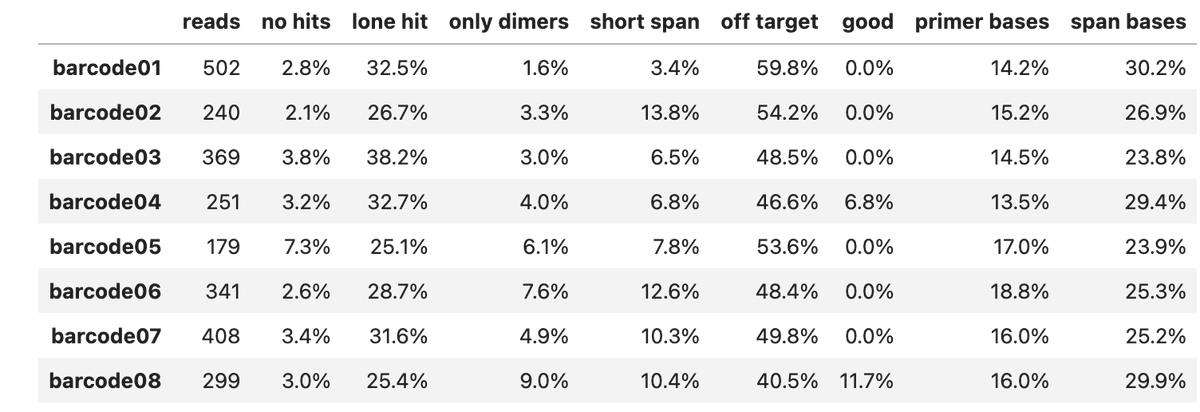
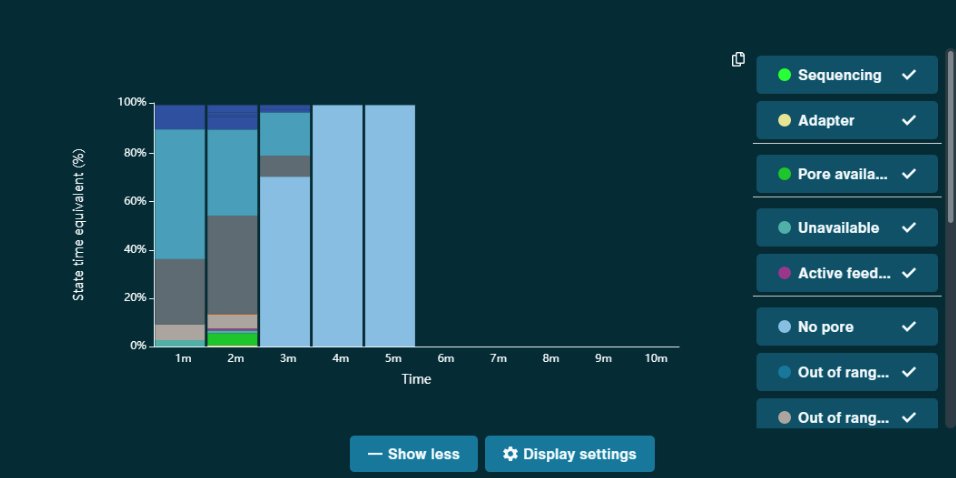
My current biggest failures: clogging my Nanopore sequencers so the return few reads, then wasting most of those on off-target amplification and primer-dimers.
https://github.com/RByers/RespiCov-analyze/blob/main/RCMatchPrimers-RC2.ipynb https://x.com/RickByersLab/status/1665515417710780417
I’ve managed to test 54 samples for 41 different respiratory infections by doing only 2 MinIon runs of 8 orthogonally pooled samples each (first the rows, then the columns). Through pairwise alignment I can tease apart different samples in the same pool.
https://github.com/RByers/RespiCov-analyze/blob/main/RCMatchSeq.ipynb
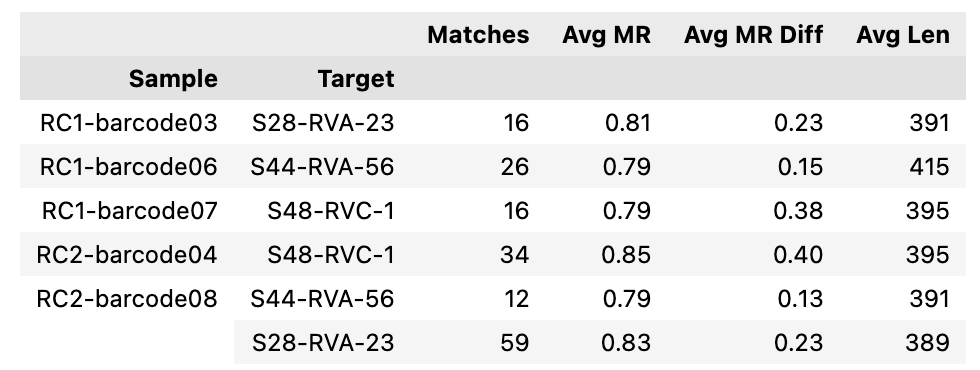
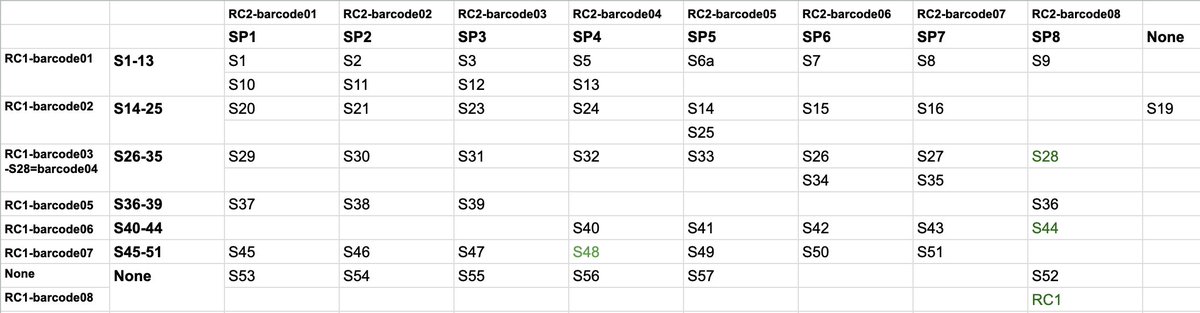
This is some hardcore modern epidemiology here!
Tracking one particular persistent infection from municipal wastewater back to a single bathroom! Now they just need to test each flush to find the individual. 😂 https://x.com/SolidEvidence/status/1587551682388295680
My son had a bad cold a few weeks ago where the symptoms lasted for over two weeks!
qPCR tests of 4 swabs confirm he wasn’t shedding by day 15, and viral load dropped by a factor of 200 from day 4 to day 6.
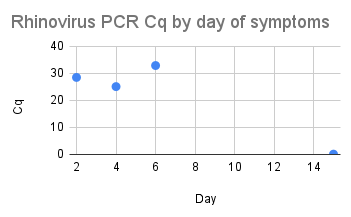
This weekend’s project: sequence this Rhinovirus to find out what type it was.
It’s the 4th Rhinovirus I’ve isolated from him in 2 years. Should I give him a scratch card to track collecting all 165 to complete his immune system training? 😂
Took me a few more weeks to get around to it, but I now have the 5’ UTR of this virus sequenced: Rhinovirus A-77.
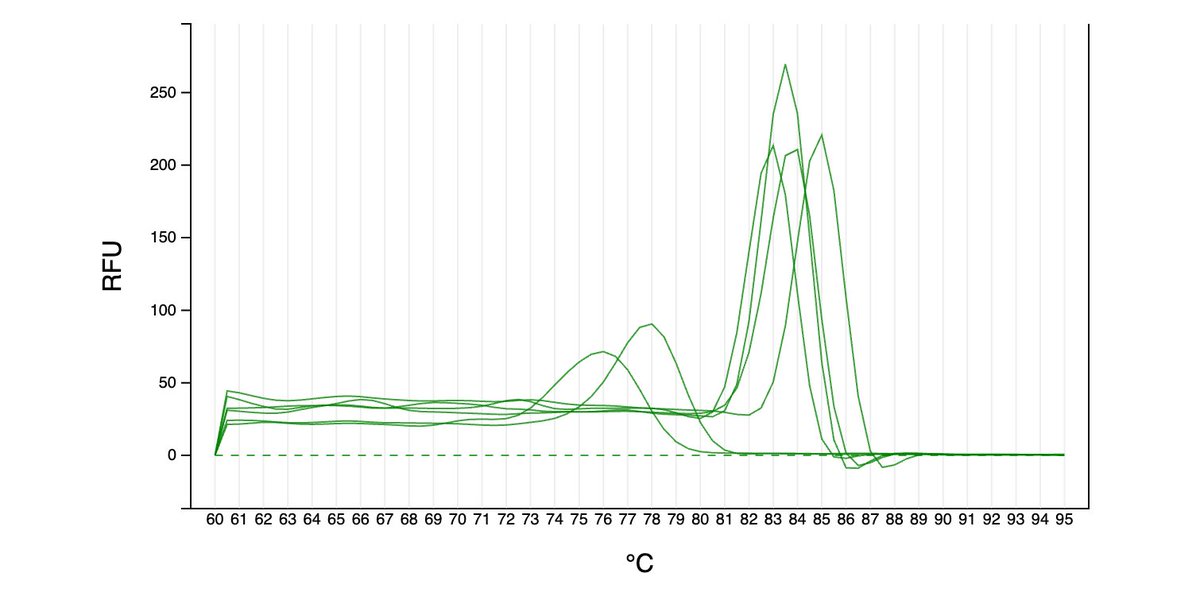
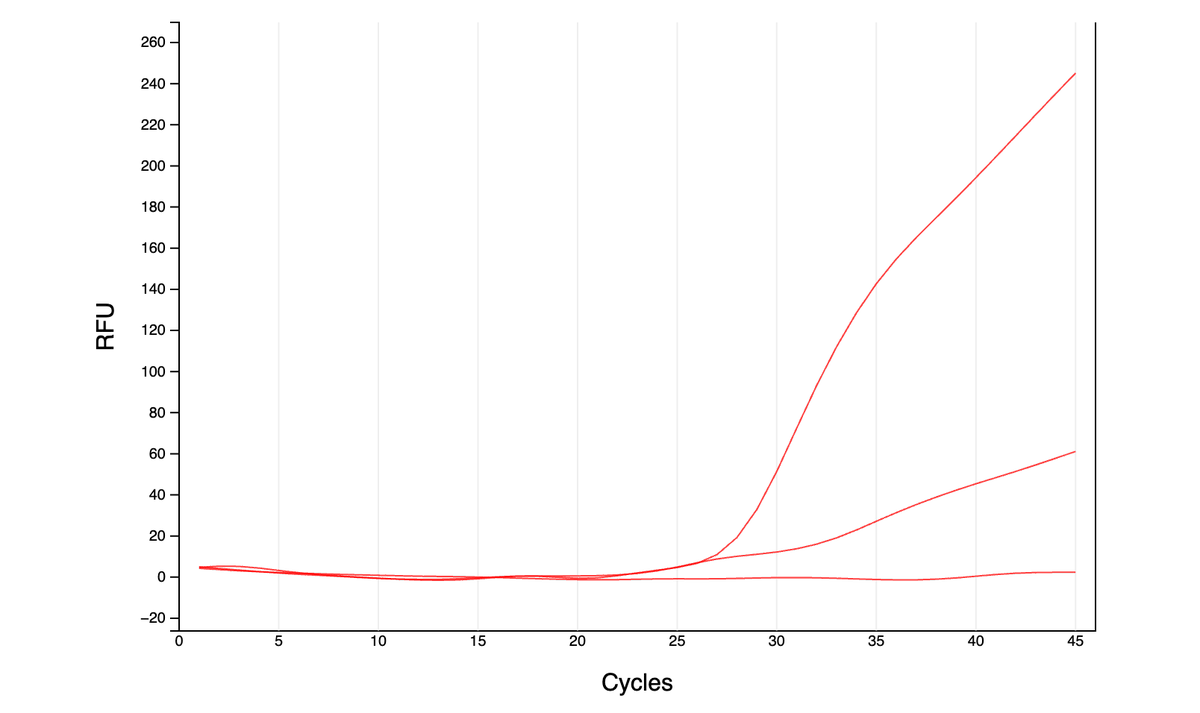
As far as I can tell from the literature, qPCR is generally done either with dye (quantify all amplified DNA and it’s melting temp - green graphs here) or with more precise TaqMan probes (detect a specific region of amplified DNA - red graph). However, …
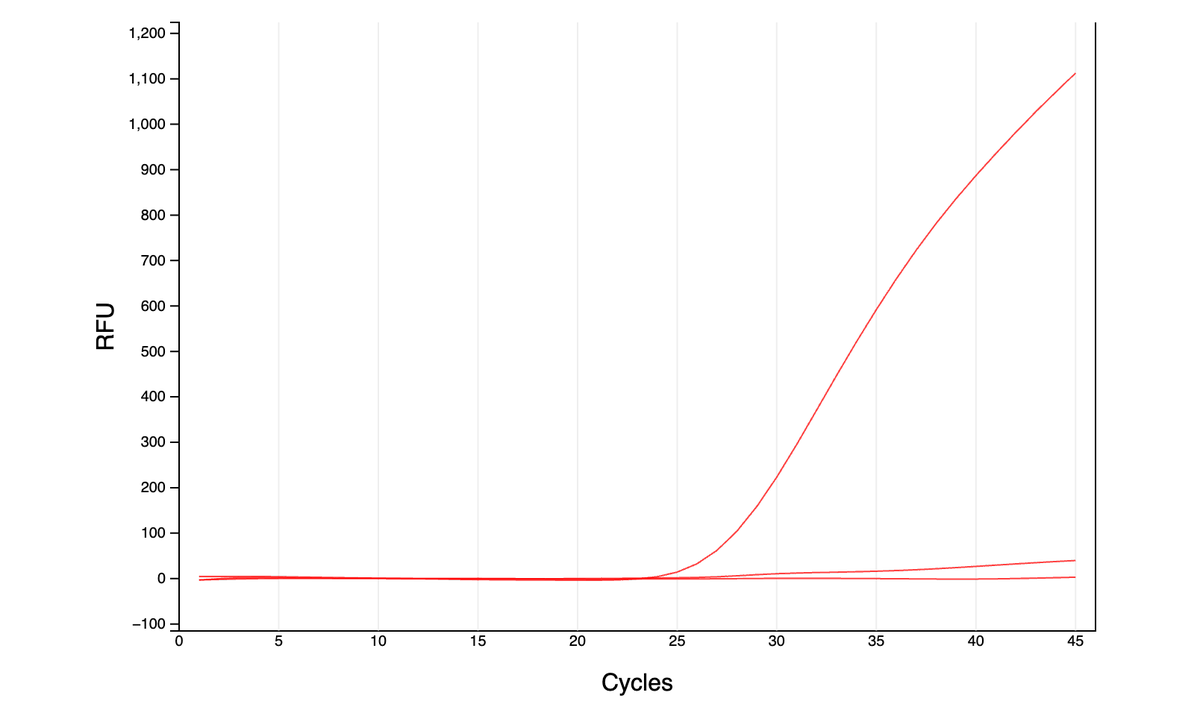
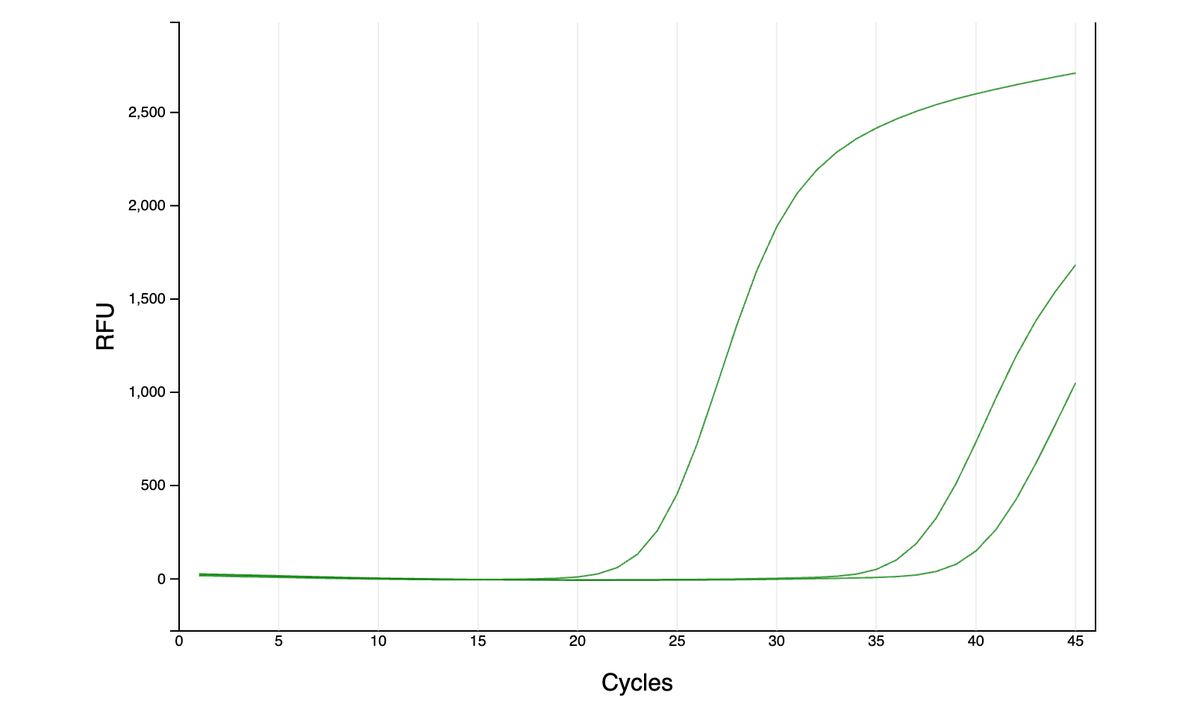
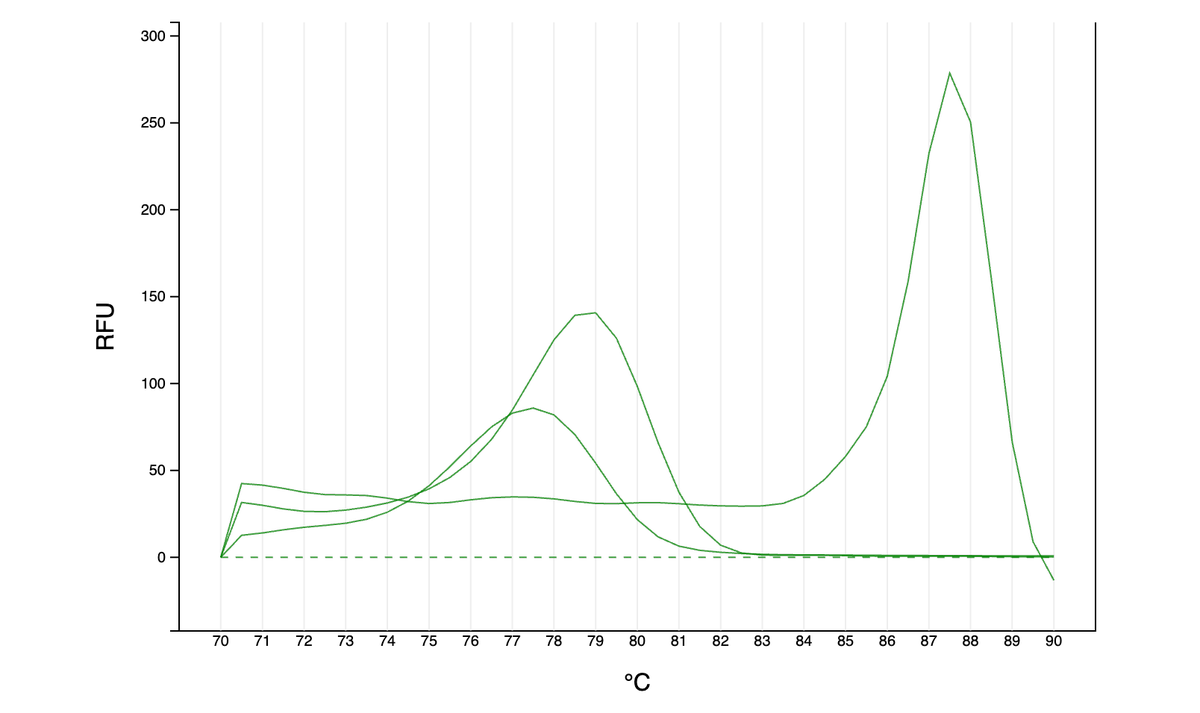
Lately I’ve been finding it really useful during assay design and optimization to use both in the same tube. Green dye with a red probe. While probes are crucial to accuracy, dye and melting-curve plots can help explain PCR failures. Eg. this probe plot looks a little funny:
And the dye amplification plot suggests maybe I have two positives and a negative:
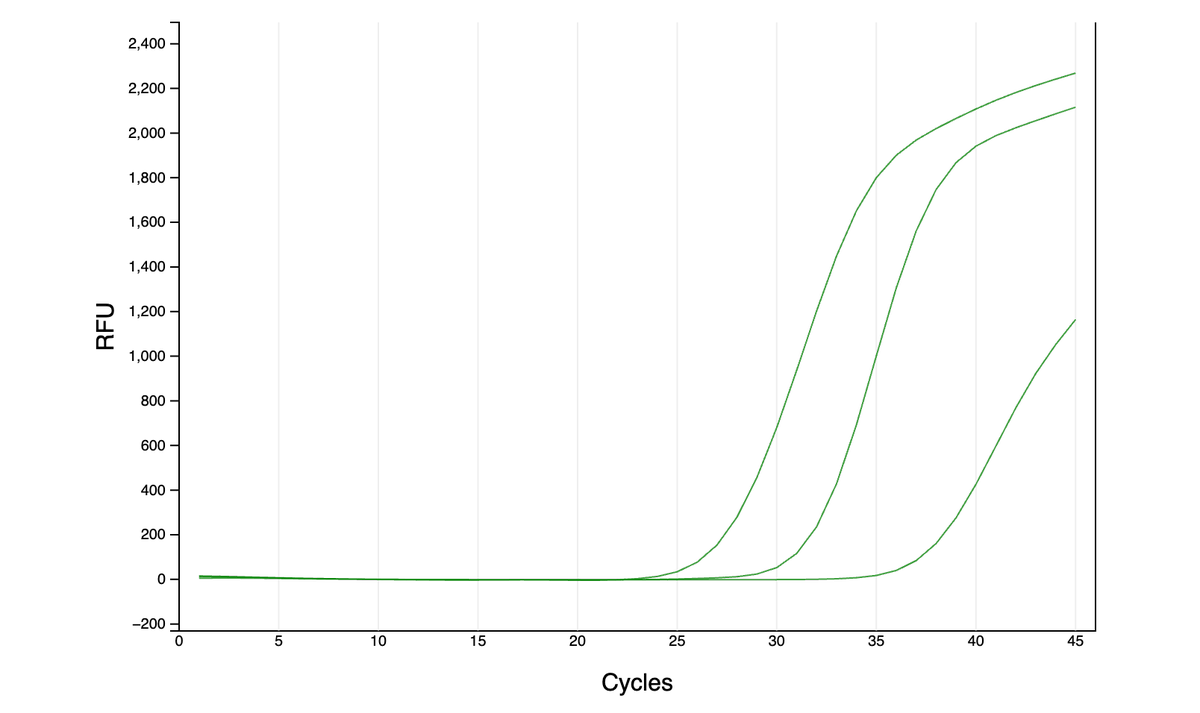
But the melting-point plot for the dye makes it clear that I’ve got some crazy non-specific amplification going on in my first two wells (and a negative - just primer-dimers - in my 3rd).
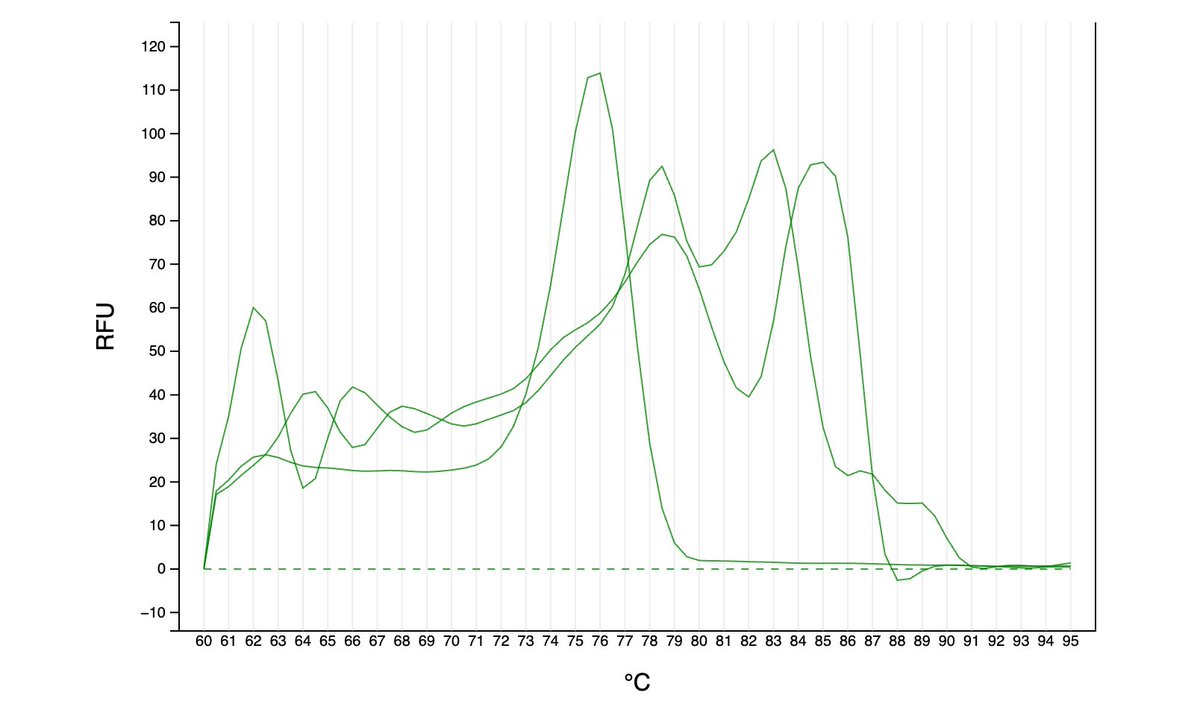
Am I the only one who finds using both simultaneously useful? Is it just that I’m terrible at PCR and real scientists don’t need to troubleshoot to the same degree? Or maybe they troubleshoot as much as I do but never write about it? 🙂
I started this because I ran out of probe master mix and decided to try using the 2-year old (and long-expired) dye master mix I still had in my freezer before ordering more. 😁
Every dilution series I do still blows my mind 🤯:
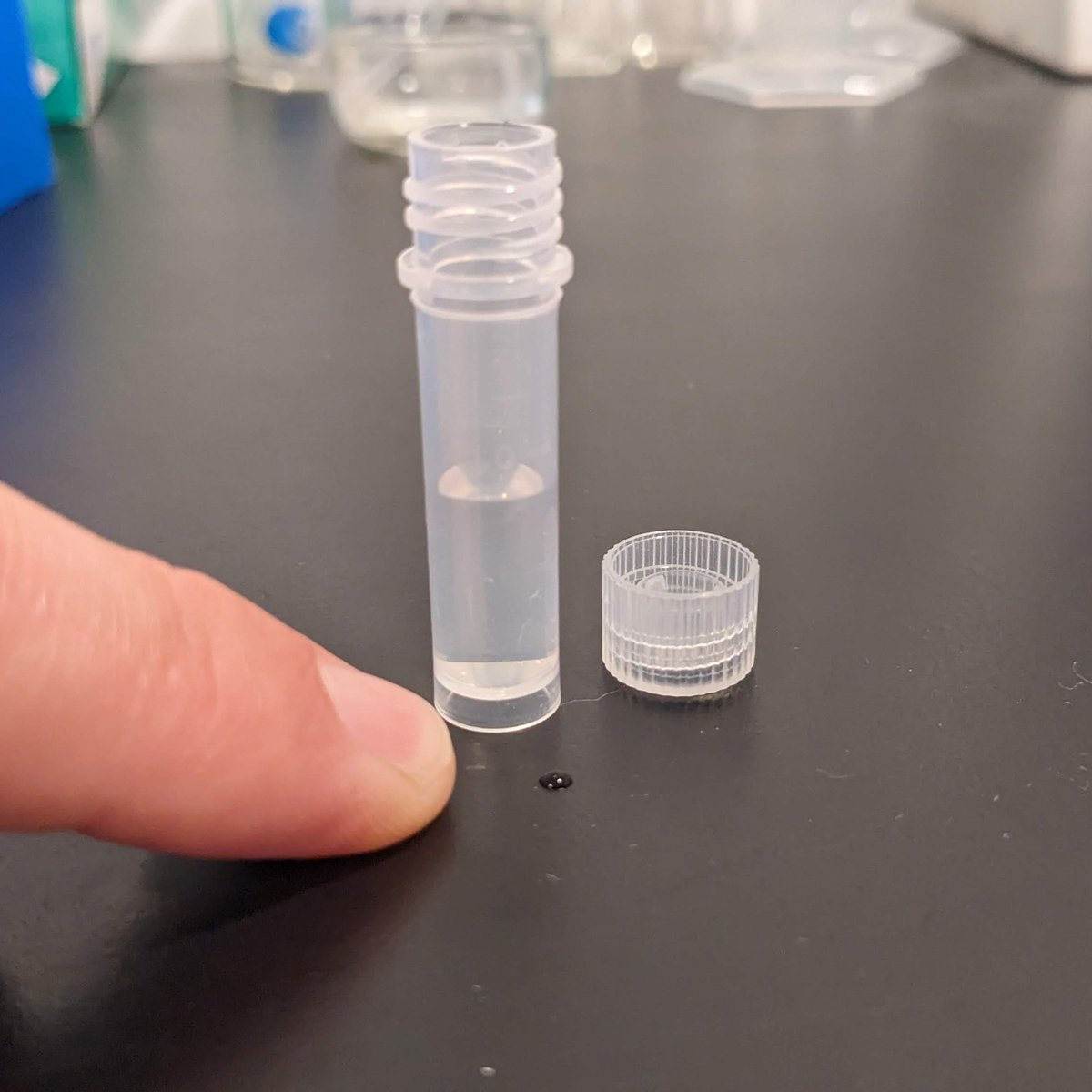
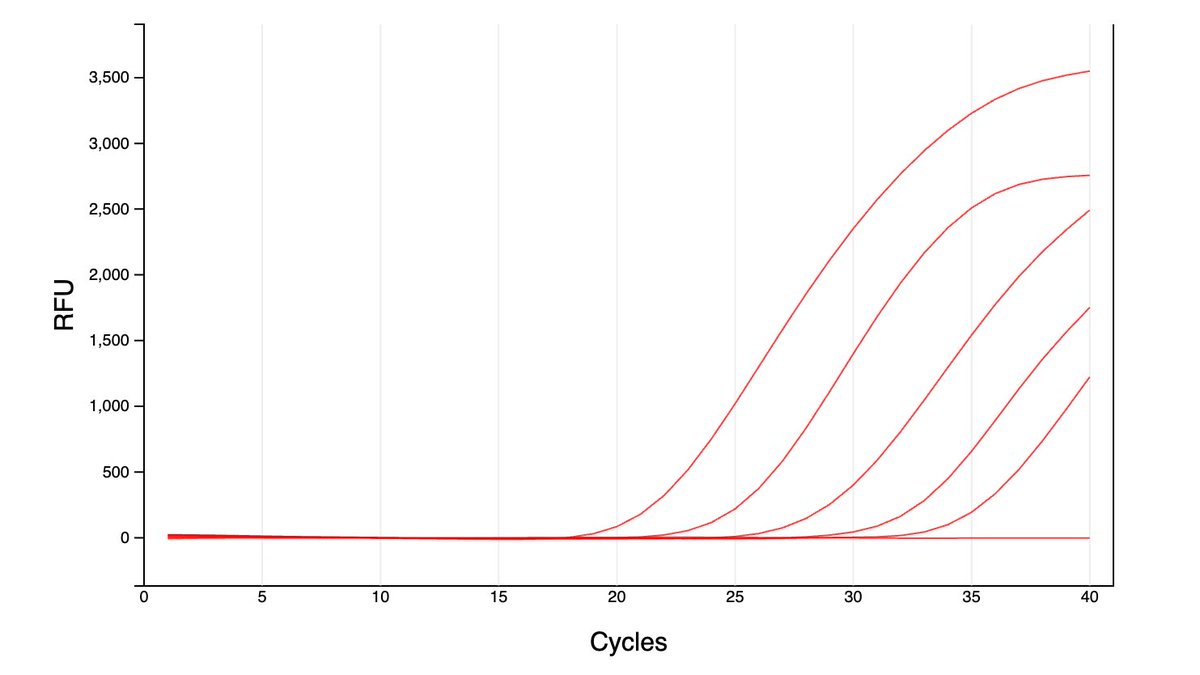
All together I diluted that bit of snot around a million times and still have no trouble finding (and, if I want, reading on a sequencer) millions of bases of DNA and RNA from my own genome and a huge variety of different microbes living in my nose.
Got some free samples today, each just a little tube of 0.05mL of liquid. First showed up packed in 2kg of dry ice, which seemed like overkill. Then the second arrived in 10kg! 🙄
No wonder it’s $3,600/mL! 😂
At least my daughter and I got to have fun playing with dry ice! 😁
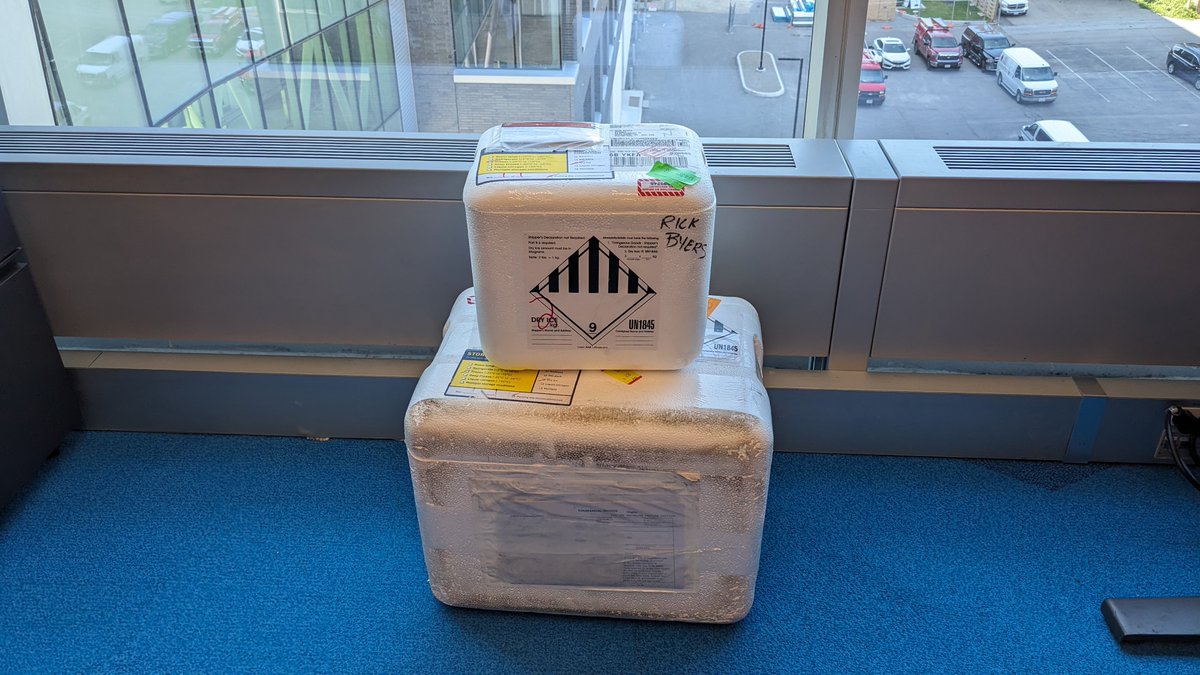
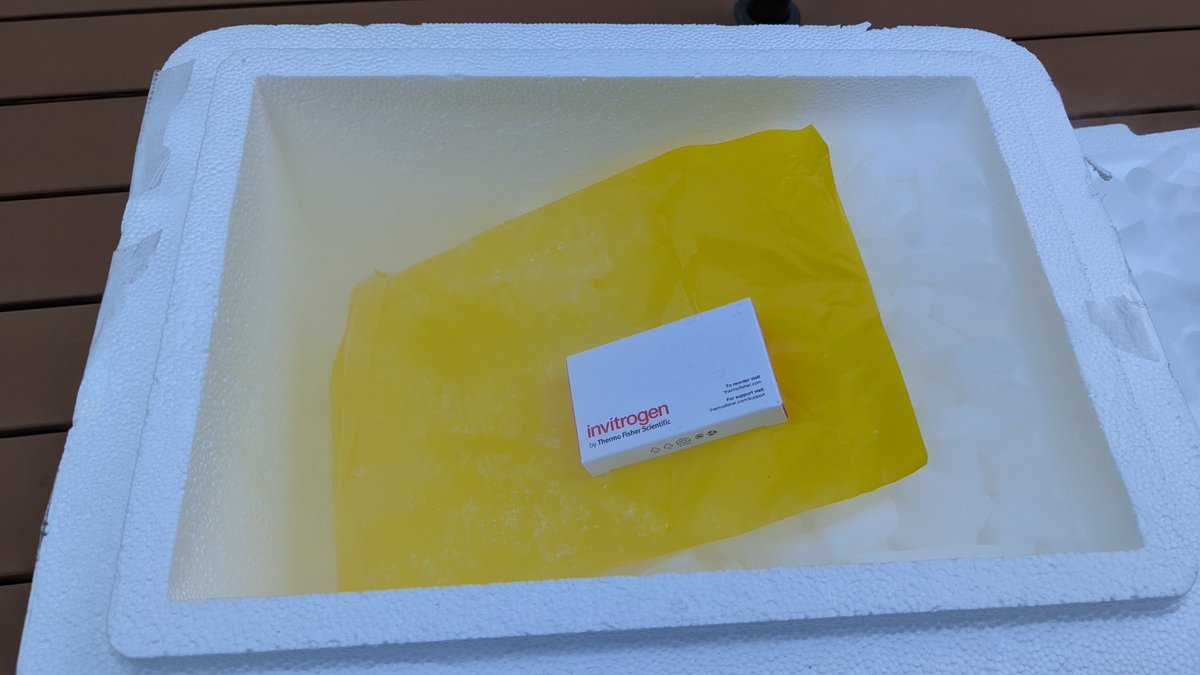
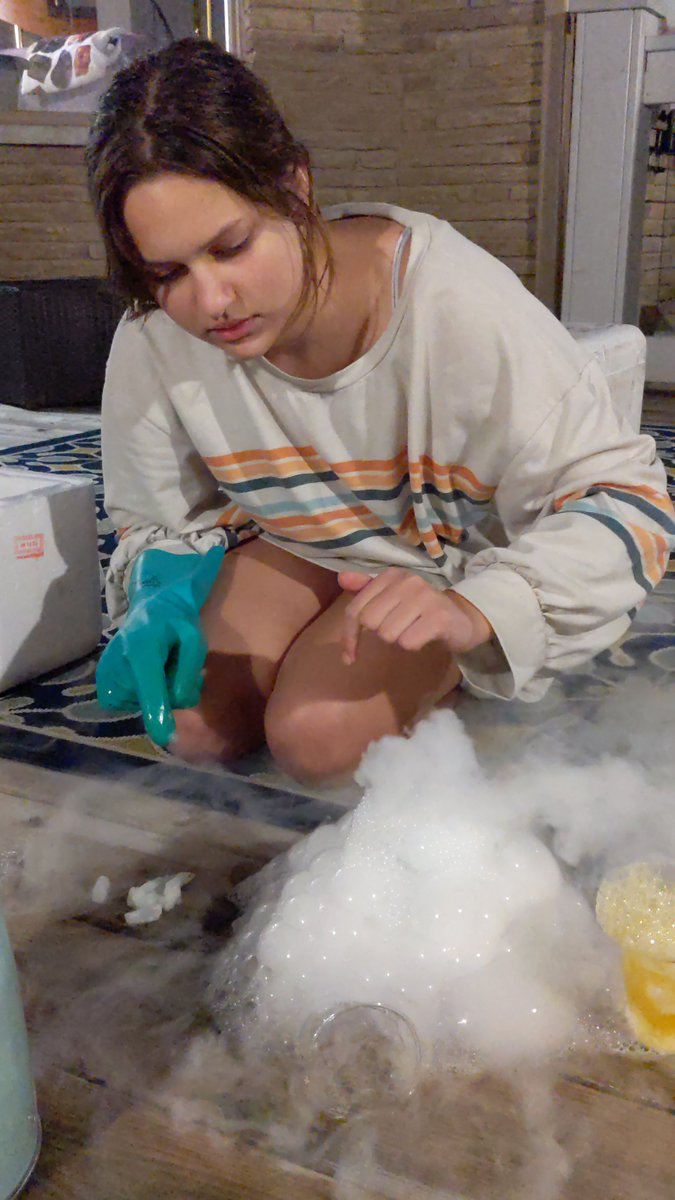
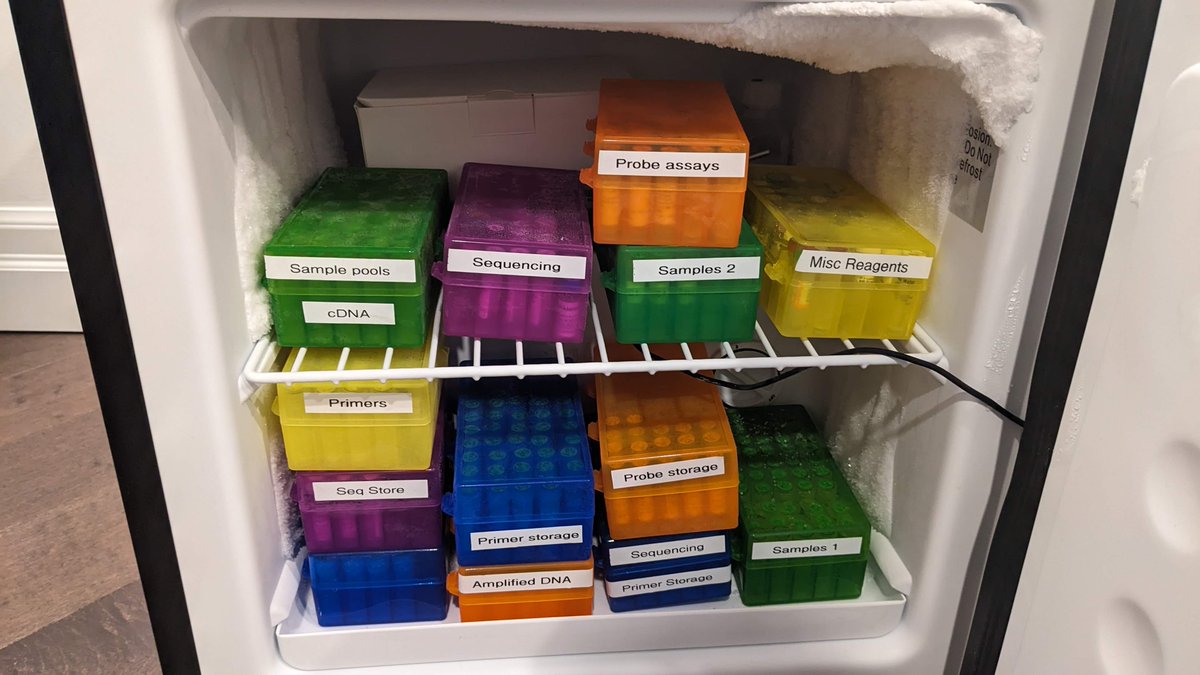
Also PSA: If you’re going to drive with 12kg of dry ice in your car, please remember to open the windows and turn recirculate off!
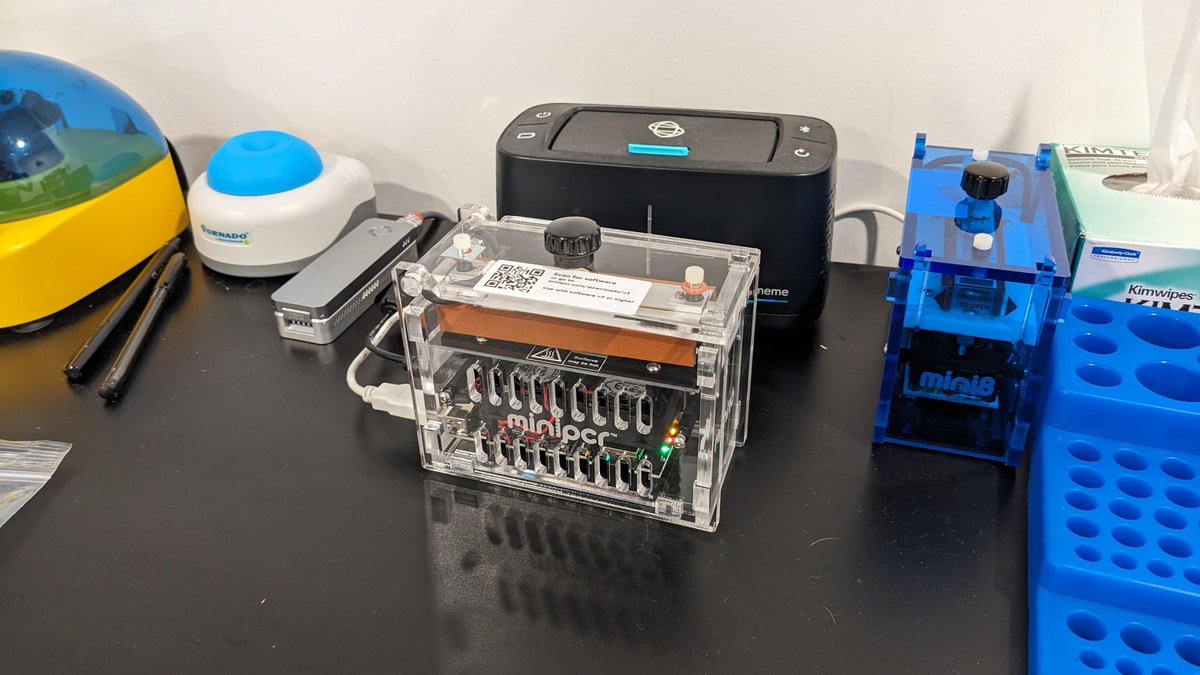
My latest lab toy: a Mini16 thermocycler from @miniPCR. 🧬🧪
It’s so nice to be able to run custom ‘Flex’ protocols (including “touchdown PCR”) and connect over BLE instead of USB!
https://www.minipcr.com/products/minipcr-mini16-thermal-cycler/
Saturday 7am. Sequencing viruses in my pyjamas while the rest of my family sleeps in. 🧬🤓
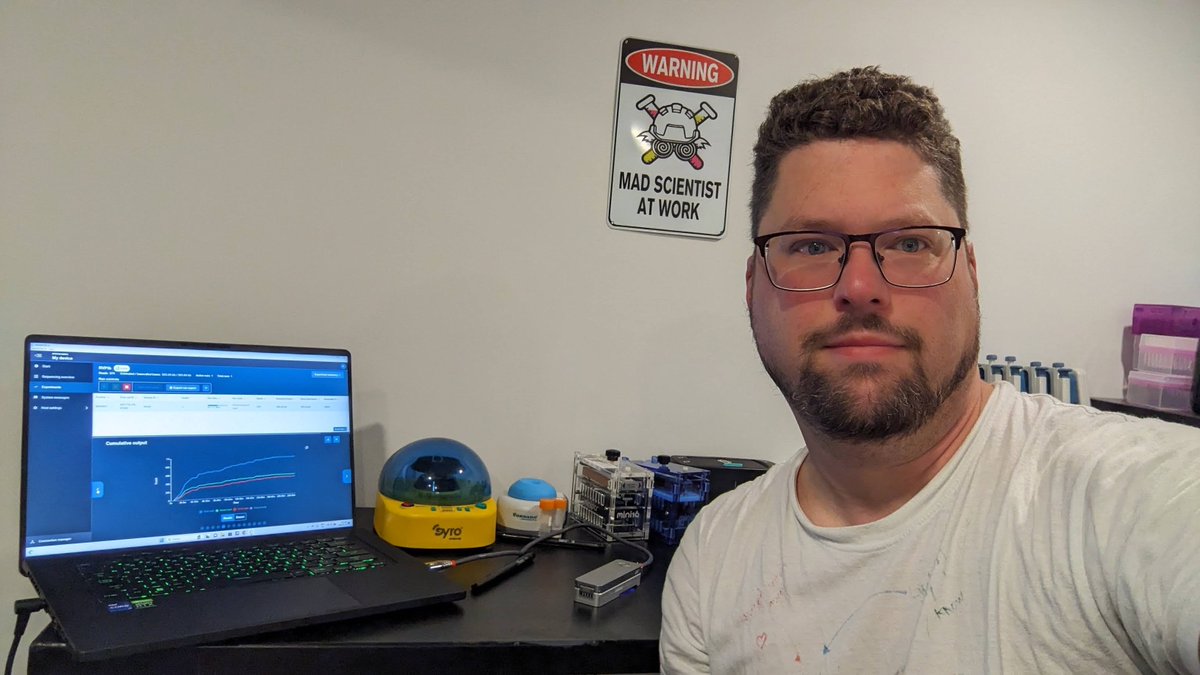
Will this be the first of many easy to use “sample in, DNA sequence out” devices? Hours of lab work automated away on a device not much bigger than a tricorder! 🙂 https://x.com/ReindertN/status/1659269104543440921
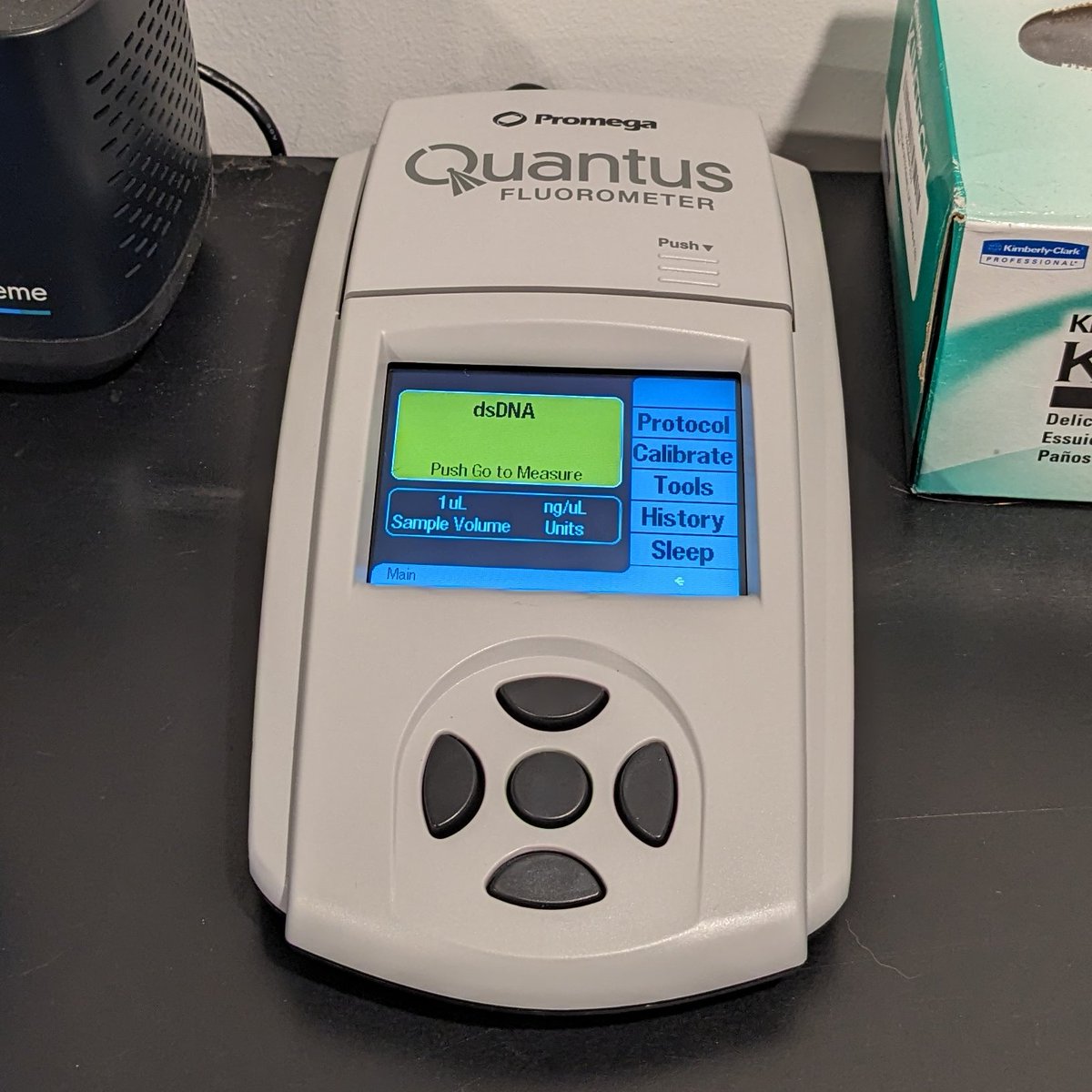
My latest toy: a fluorometer for precisely measuring the concentration of DNA via the fluorescence of a dye that binds exclusively to double-stranded DNA.
I wonder why qPCR machines don’t do this job too?
About a year later, finally the science seems to be catching up to the anecdotes like my own.
Paxlovid is an amazing drug, it probably just needs a longer treatment course! https://docs.google.com/spreadsheets/d/1FcPSet0gHpoW9WQ4GTBCdV7brnDfEOC5fRTTvx4-mBQ/edit?usp=drivesdk https://x.com/__philipn__/status/1675357419424342017
My son came down with a cold 17 days ago. He wore a mask when around the family until his symptoms were done 11 days ago. Yesterday I came down with a cold too. Nobody else in the family has had cold symptoms in this time.
What’s your guess?
I have PCR results confirming that both are Rhinovirus (not surprising, around half of all colds are). Note Rhinovirus incubation period is around 2 days: https://www.ncbi.nlm.nih.gov/pmc/articles/PMC3928210/#:~:text=The%20incubation%20period%20varies%20but%20is%20just%20under%20two%20days%20for%20rhinovirus.&text=Symptoms%2C%20which%20generally%20relate%20to,occasionally%20persist%20for%20three%20weeks.&text=They%20include%20sore%20throat%2C%20rhinitis%2C%20rhinorrhea%2C%20cough%20and%20malaise.
With luck, by Monday I’ll have sequence data proving whether it’s the same virus or not.
Well, luck isn’t on my side this weekend 😢. My 2 remaining flongle flow cells were dead. They were a little past their warranty period (4 months old, guaranteed only for 4 weeks). So I won’t be able to answer this until I shell out another $1,000 for 6 more flow cells. 😭
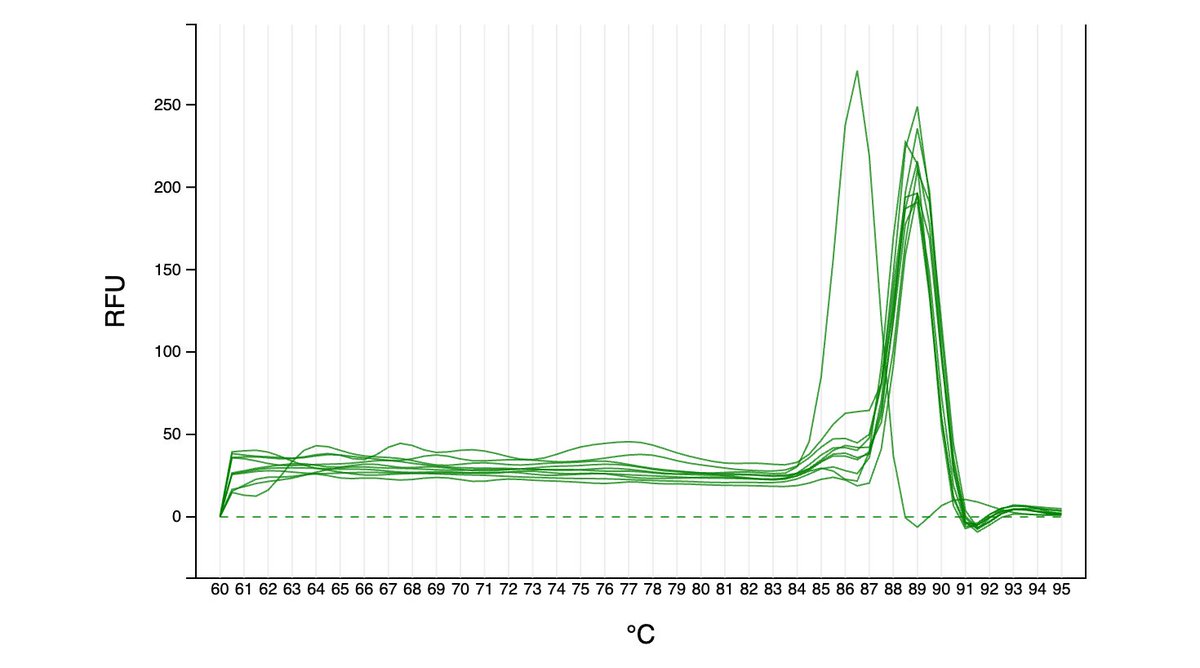
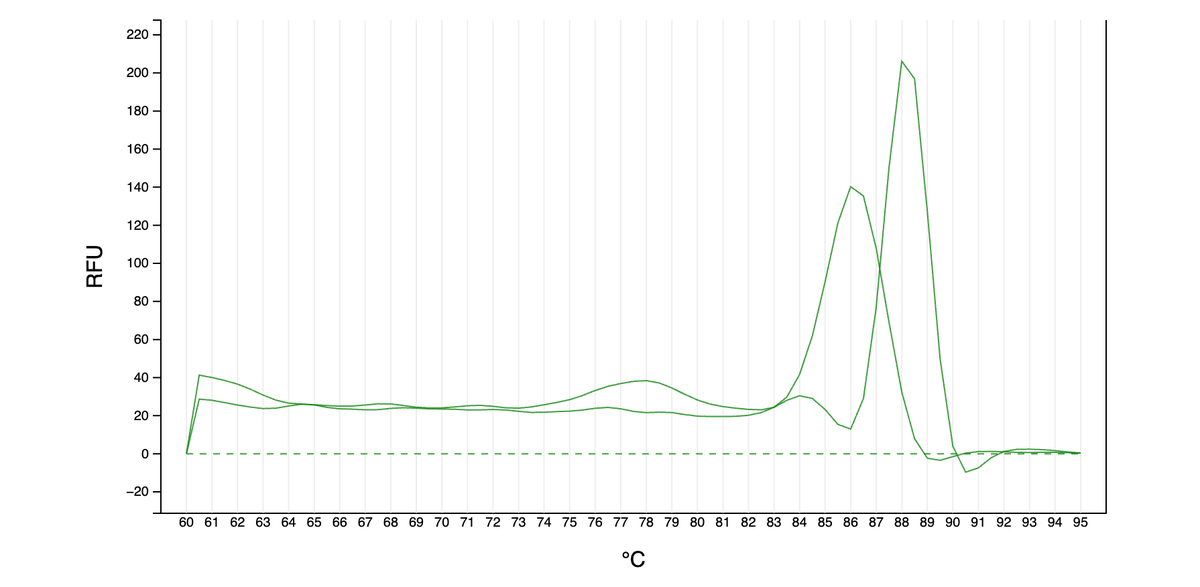
Oh but I found another way to answer this question! Different Rhinoviruses may have a different PCR assay “melting point”. My cold this week are all the curves on the right (89°), and my Son’s cold clearly stands out on the left (86.5°).
So it’s definitely a different virus!
Wow, a Rhinovirus PCR Ct of 17 (would have been 14 if I hadn’t diluted with water).
I hope I don’t contaminate my reagents just by sneezing in the same room!
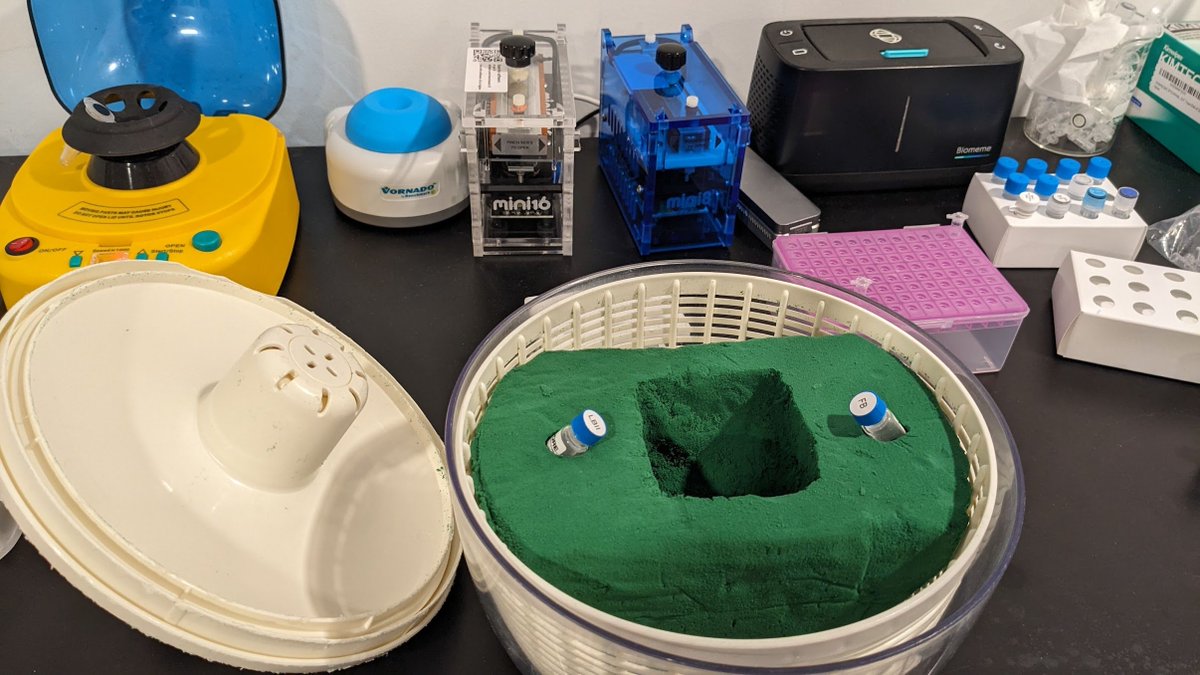
Finally made a salad spinner centrifuge for spinning down those pesky ONT glass vials which won’t fit in my @miniPCR Gyro Plus.
Perhaps floral foam wasn’t the best choice for a microbiology lab, that stuff is messy!
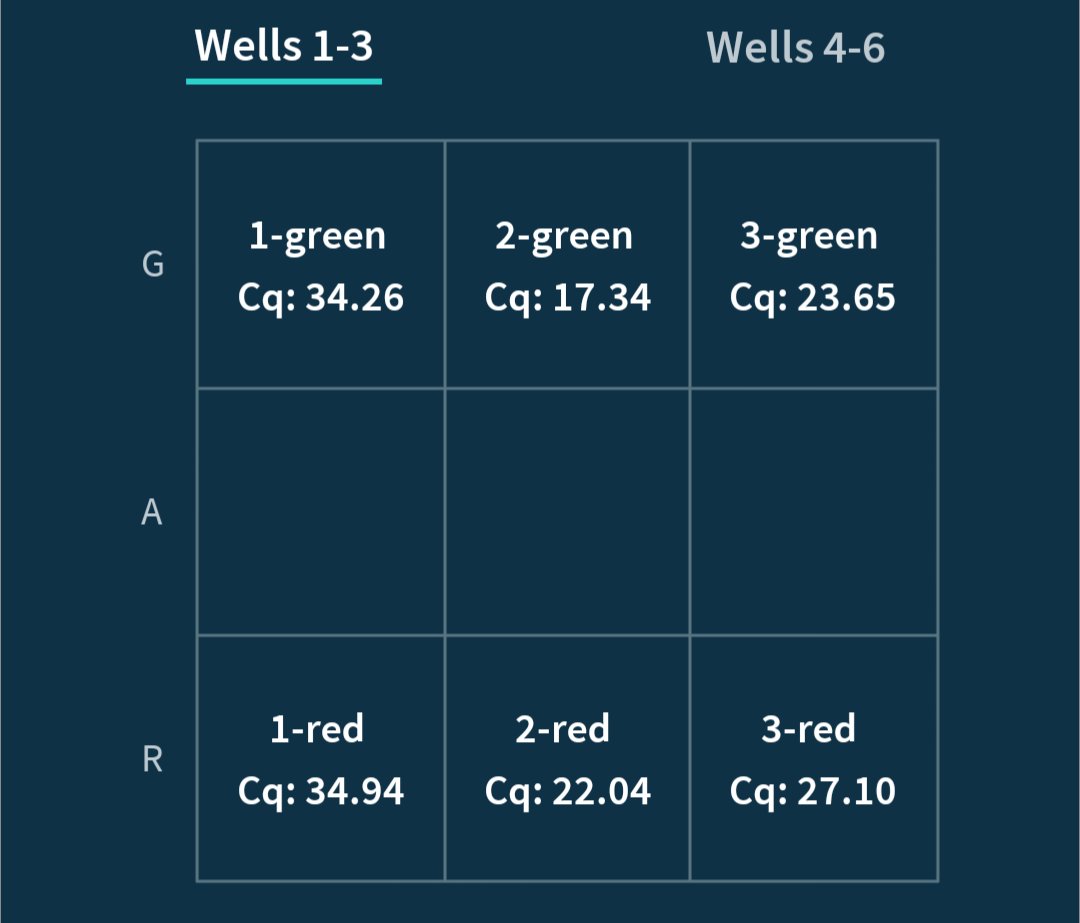
Being sick with Rhinovirus, I figured it was a good chance to test the effect of different sample methods on PCR results / sensitivity.
This is just one data point, but it’s amazing to me just how close ON, Nasal and NP came out. I’m definitely not giving myself more NP swabs!
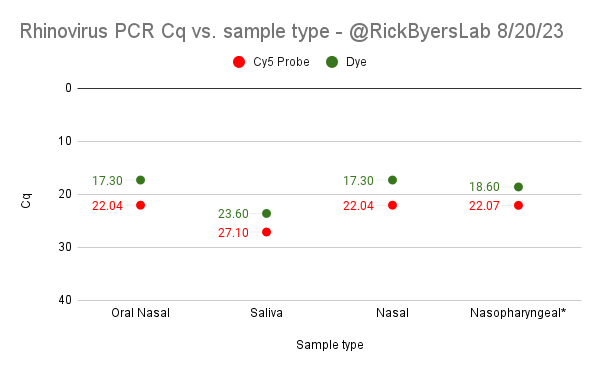
*: This is a self-administered NP swab, probably a professional could do better. But I managed to get the same eye-watering throat-tickle that I’ve felt when a nurse does it, so I definitely hit my nasopharynx!
Also this chart shows one reason why absolute Cq values are pretty meaningless without context / quantification. Choice of fluorophore is one of a dozen sample & PCR details which can offset the value up or down by several logs!
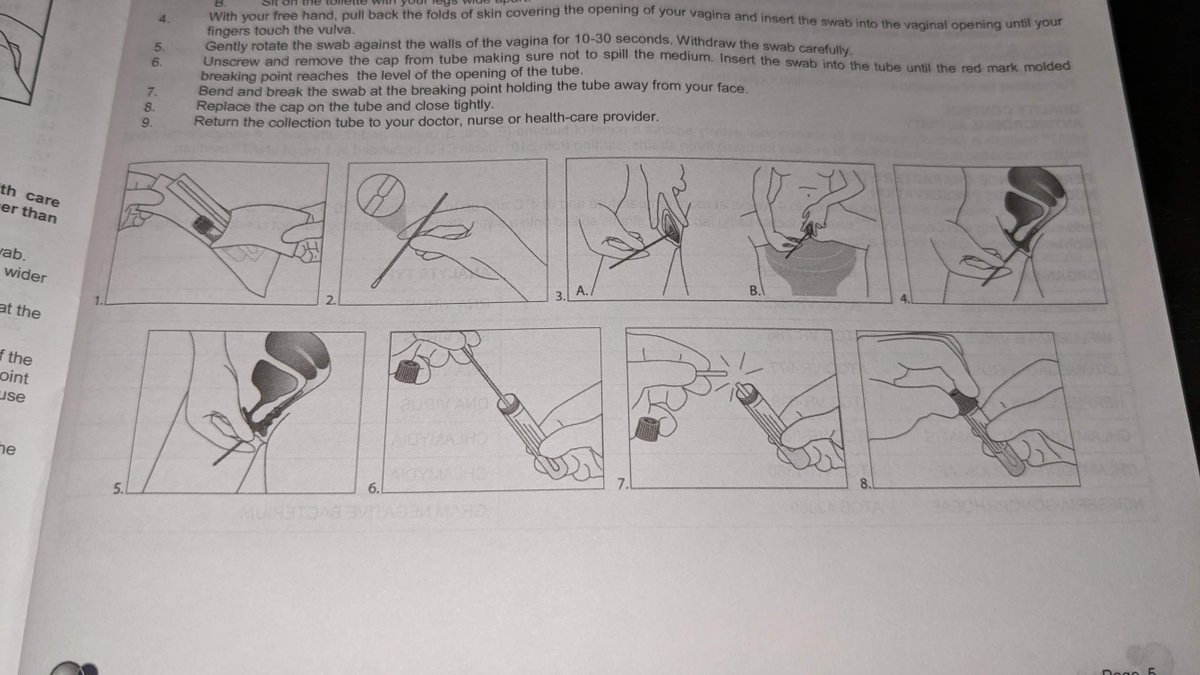
I finally got to the bottom of a bag of swabs I’d been using for respiratory virus testing the past 2 years and realized there was a manual at the bottom. I figured I might as well read it in case there were any useful tips…
Turns out I was definitely using them wrong! [1/2]
😂
Today I turned 45 and my kids got me a little piece of (I believe) every stable element in the universe!
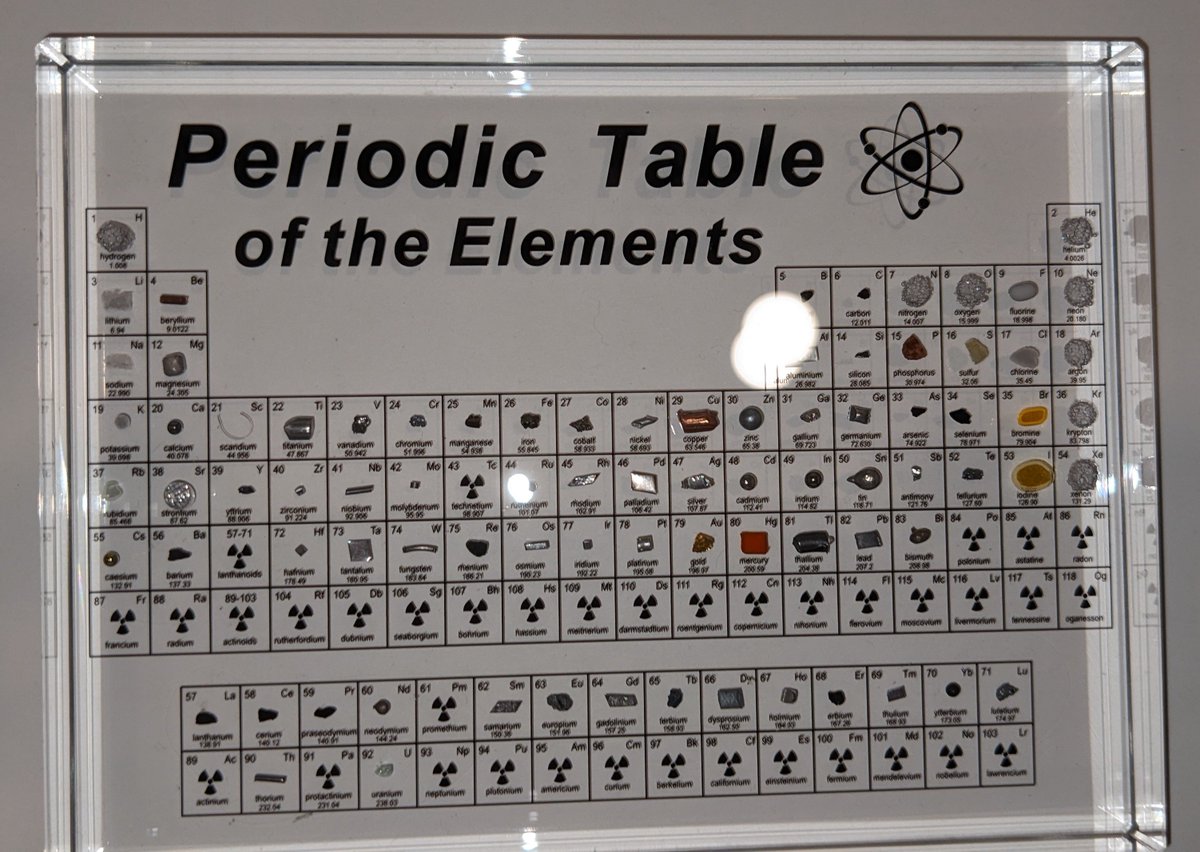
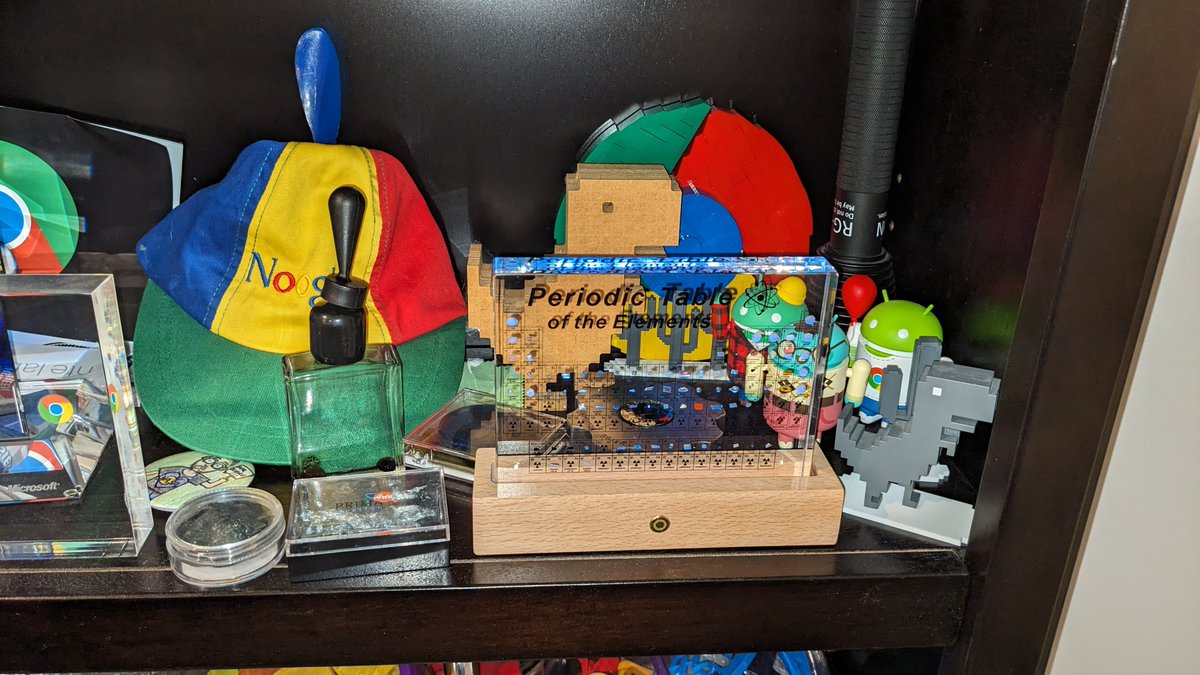
A nice addition to my nerd shelf. 🤓
Ok all my shelves are pretty nerdy, but this one has gallium (metal that melts in your hand), a ferrofluid, various polarized filters and a bunch of Google stuff.
Finally got my Rhinovirus PCR assay sensitive enough to detect it in a cold sample of mine back from November (Cq=33.4). I assumed it was the same Rhinovirus my son had at the time (C-1) but a melt curve comparison says otherwise!
Added to the list to sequence…
I was so annoyed to have gotten sick at the time because I had to cancel a trip to California for one of my favourite conferences. I guess I can’t blame my son for sharing his germs!
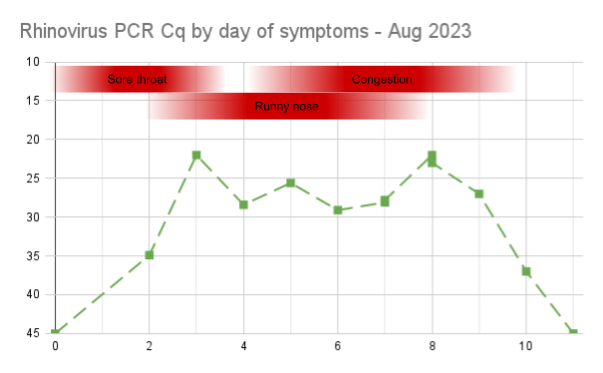
I finally got over my cold (Rhinovirus). I did a PCR test every day to correlate viral load with symptoms. I’m surprised how high my viral load apparently was right up until the end. I was probably contagious day 8 but would have gone to work if it weren’t for the PCR test!
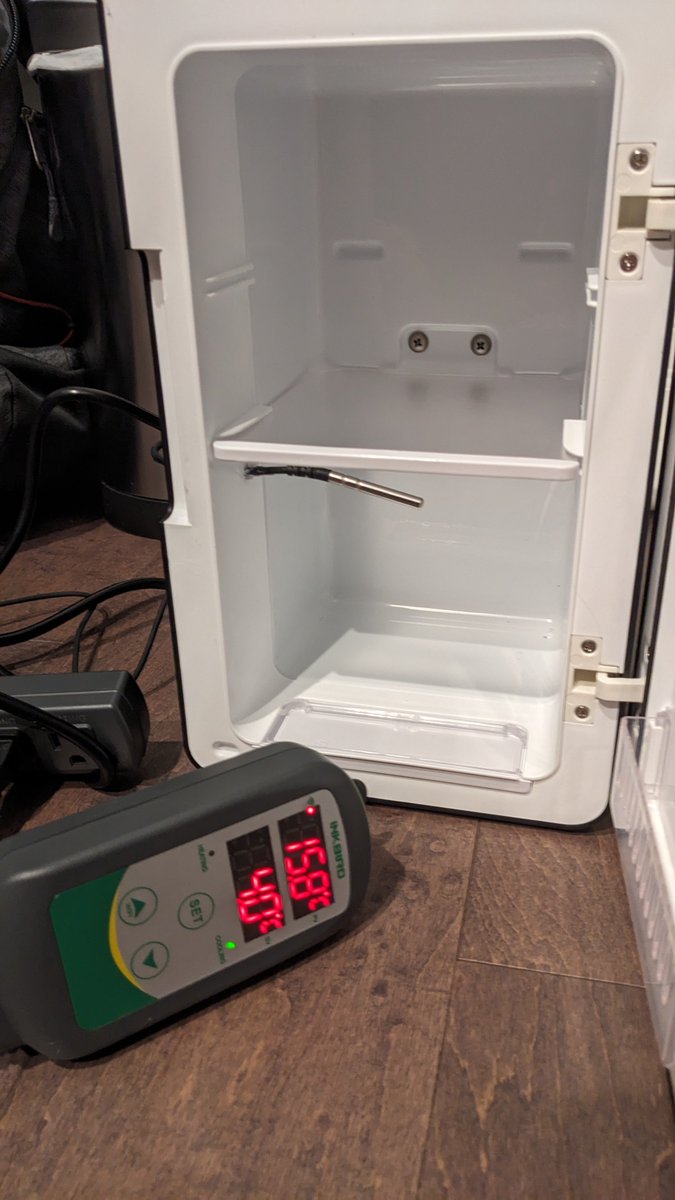
Needed a small, inexpensive yet reliable fridge to keep my flow cells at 4° but never below 0°. My solution: a cheap little drink fridge with a hole drilled in the side for the probe of a WiFi temperature controller 🙂. Alerts to my phone on over-temp and shuts off below 2°.
Heading to Vegas in two weeks. Was hoping to get the XBB COVID shot before I go, but Canada is SO SLOW! Wondered if I should just drive to the US on the weekend to get my shot? Instead settled for bivalent Moderna today, should be almost as good right?
To what extent does getting another shot of our best COVID vaccines reduce your risk of infection? For arguments sake, say comparing folks with a shot 2-8 weeks ago vs. 3+ shots >12 months ago.
Will research and share links to serious studies after the poll closes.
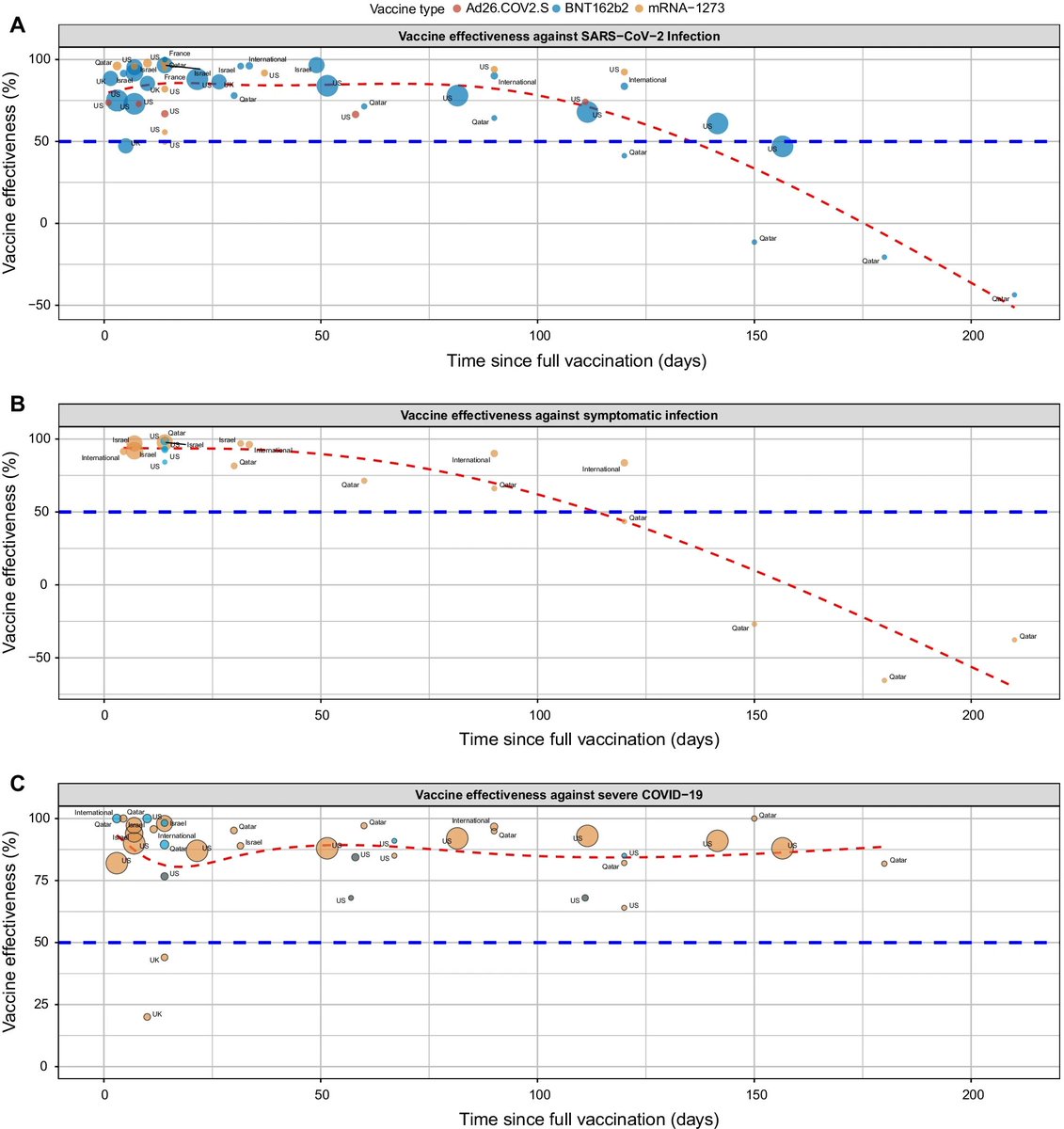
Best evidence I can find suggests the answer is probably around 50%, maybe a little higher. That is, getting a recent shot cuts your risk of infection in half! I think most folks are under-appreciating this, leaning too much into “vaccines don’t prevent infection”. Some data:
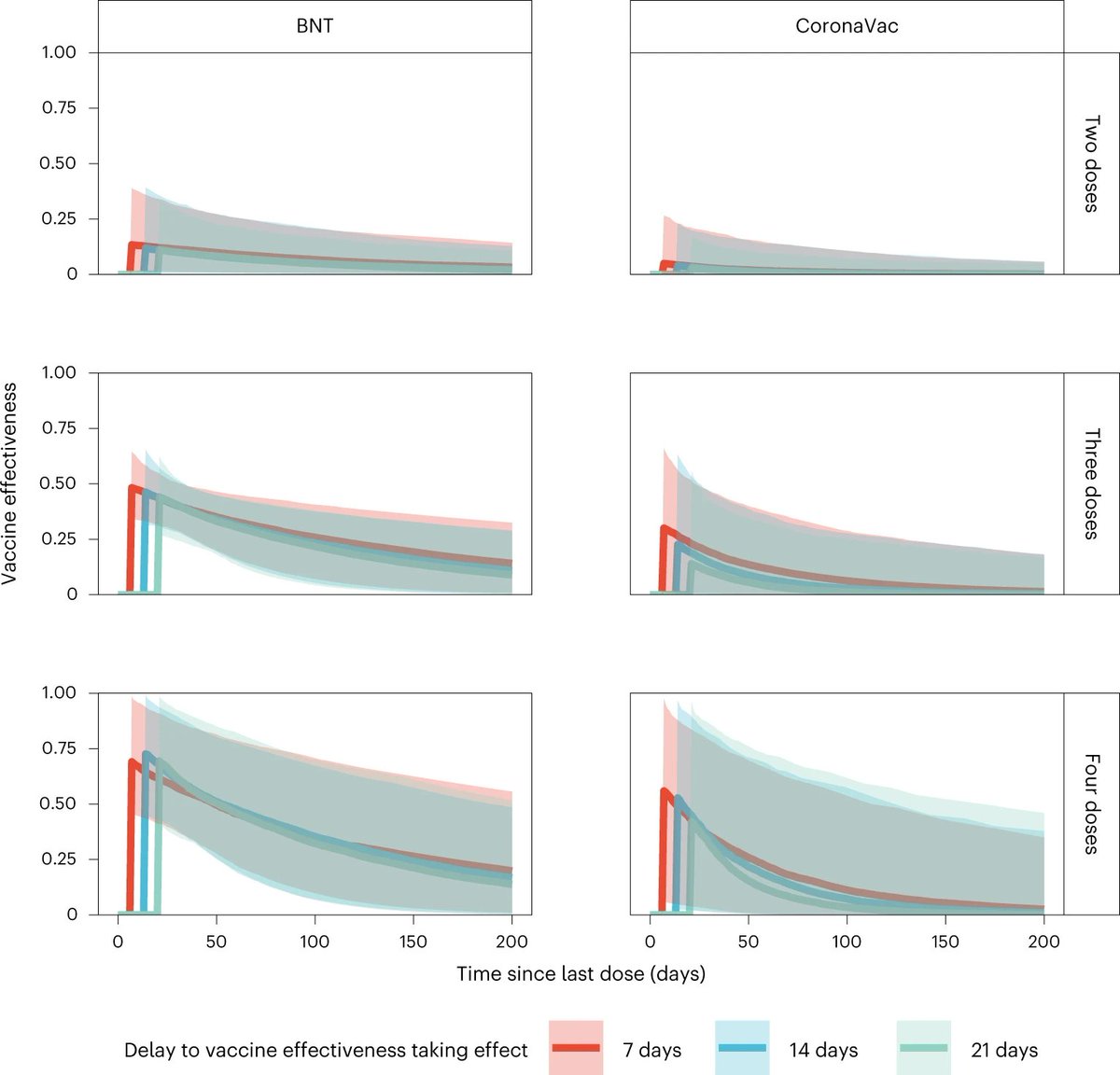
In this study, a serosurvey (antibody test) was done for >5000 people in Hong Kong and correlated to their time of last vaccination. A recent 4th dose conveys ~75% protection, while 3 doses >200 days is ~20%. https://www.nature.com/articles/s41591-023-02219-5
Here’s a meta-analysis that looked at 18 of the best studies (covering 6.8 million subjects). It found a similar pattern of VE being high around 85% for the first 75 days or so, then falling to below 50% after 150 days. https://bmcinfectdis.biomedcentral.com/articles/10.1186/s12879-022-07418-y
It’s just an anecdote, but I’m in the middle of a bit of a personal test of this. My wife and I went to Vegas for our anniversary. I made time for a shot a week before going, she did not. We both went to all the same places and wore masks at the same times. And…
As soon as we got home, she tested positive and has been really sick for several days now. I have not. I thought I had gotten it from her (felt a sore throat yesterday) but feel fine today and still negative!
I get folks like @profvr saying 3 doses is enough for healthy people. But even if it’s not life threatening, being sick can REALLY suck! With the very low adverse reaction rate for 4+ doses, I, for one, will be getting mine twice a year!
Gave this a talk on my molecular biology hacking to a small group of local tech and healthcare enthusiasts this evening. Lots of fun discussion and speculation on the future of healthcare!
https://docs.google.com/presentation/d/1uhO8CA9pNfAq7WvMBR0J71SphSPthJA-aVu92UpfuKg
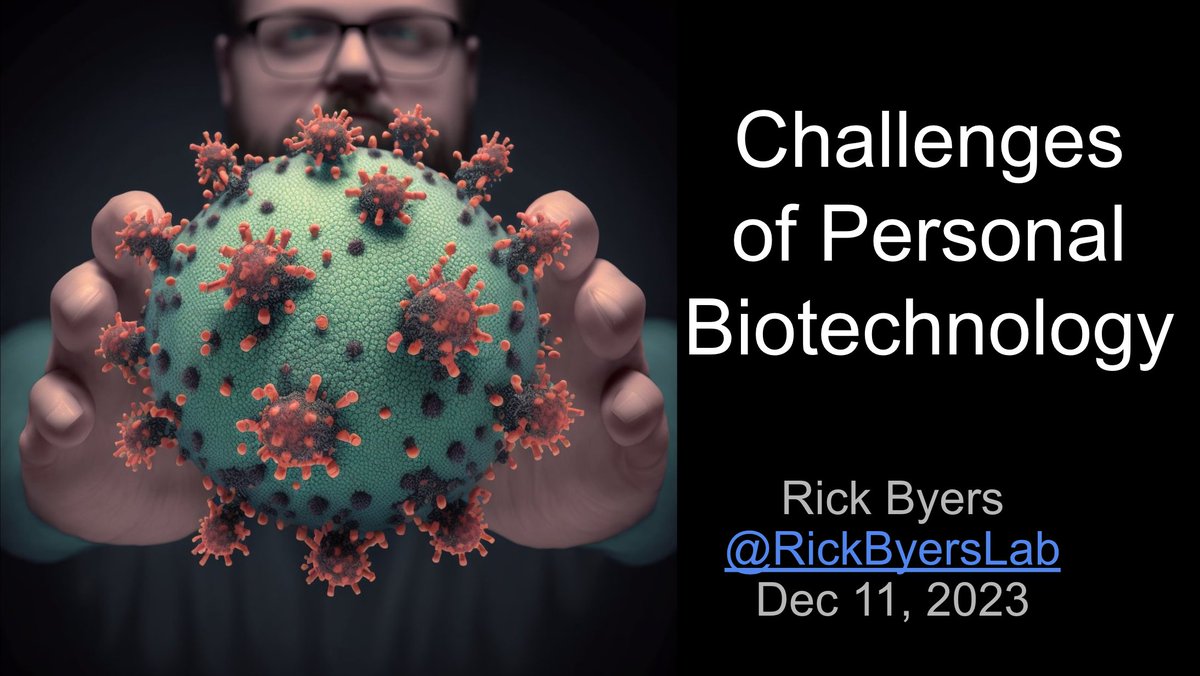
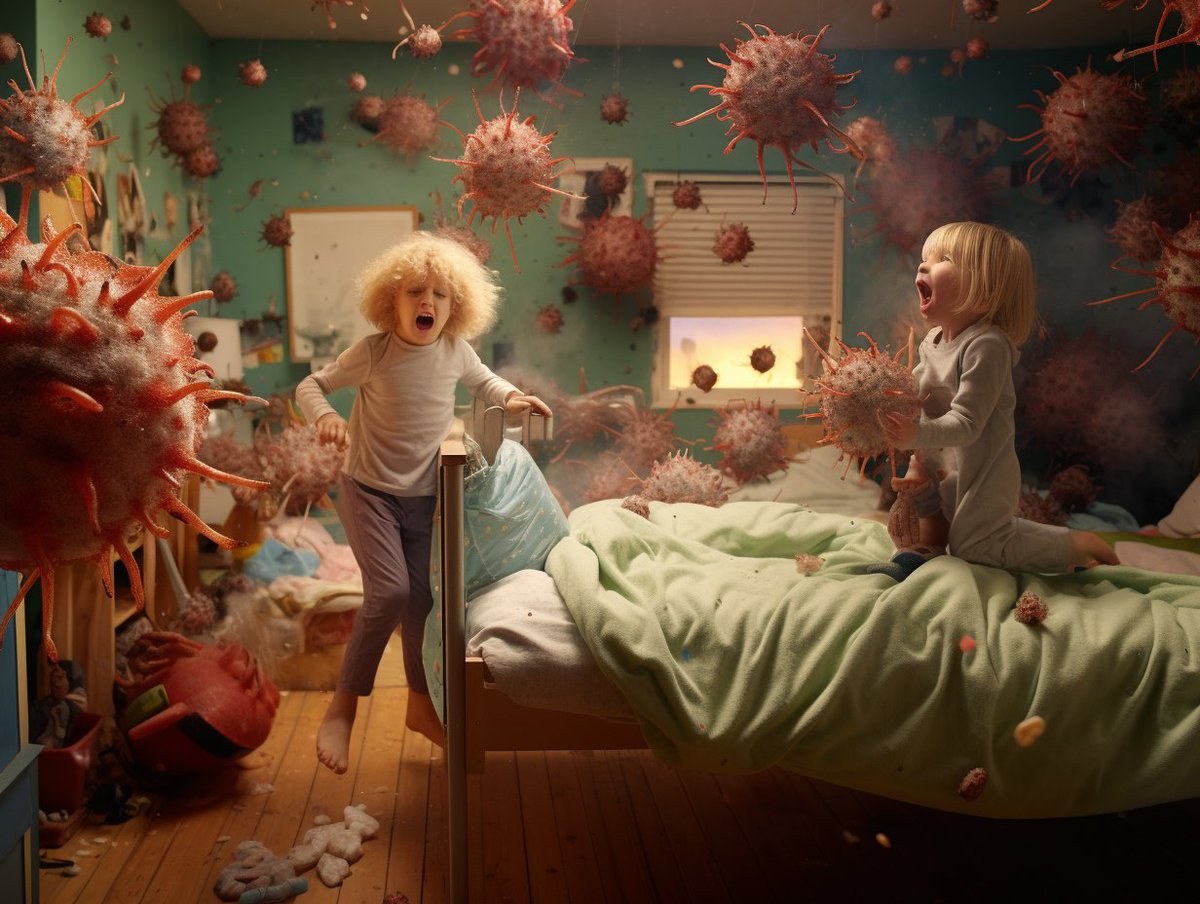
I especially like this image Midjourney made for me. I asked for kids playing happily with small viruses floating around, but apparently Midjourney can only imagine viruses floating in the air if they’re giant and the kids are screaming! 😂
Wow, the 78 types of the Rhinovirus A virus (a type of common cold) are, on average, only around 70% identical to each other. For comparison that’s about as related as a Human and a Rat!
Now I understand why I can’t find a protocol for full genome amplification.
Swabbing toilet water containing faecal matter may give a positive result on a COVID rapid test two days sooner than a standard nasal swab! https://x.com/JusDayDa/status/1735841554785587390
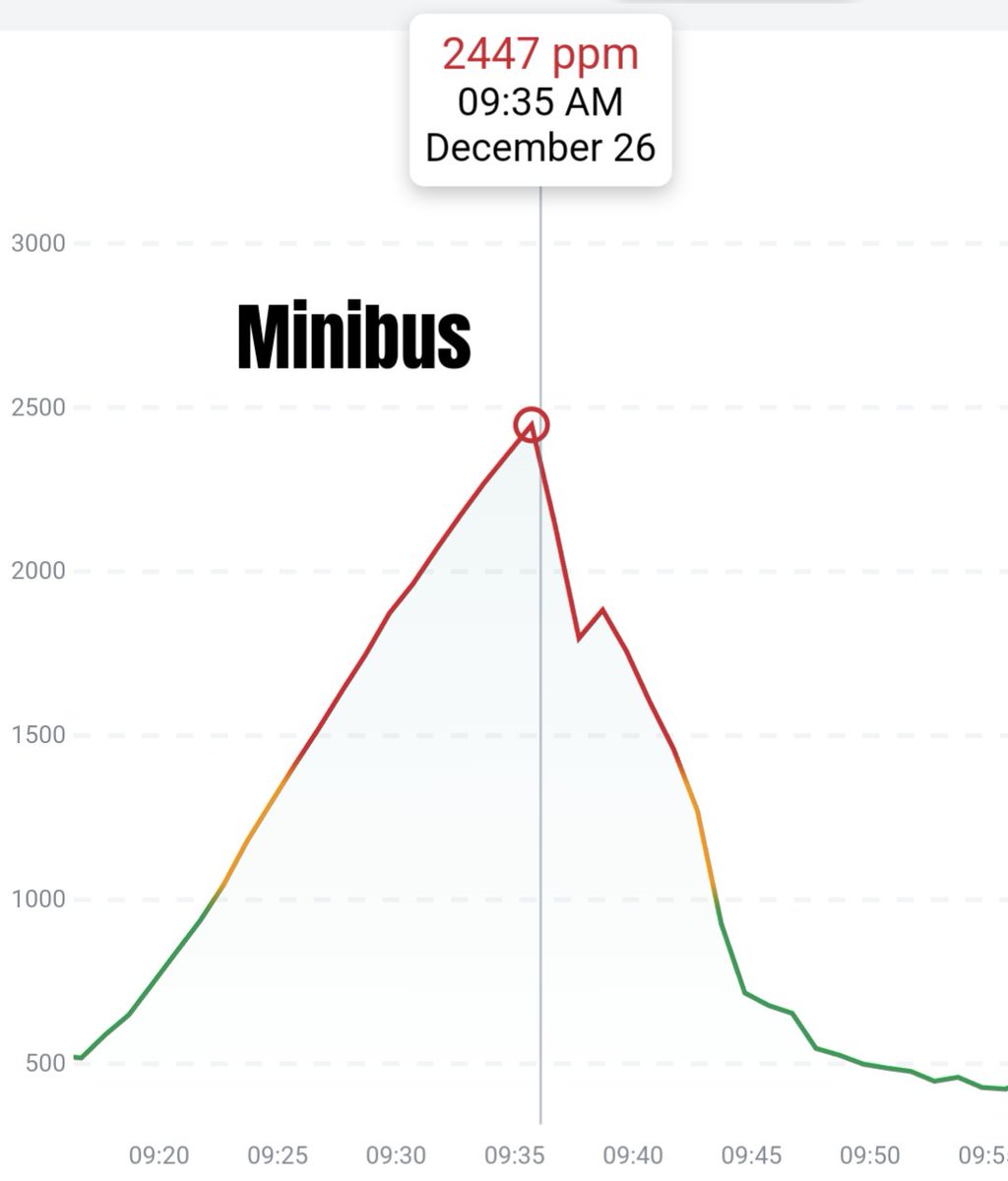
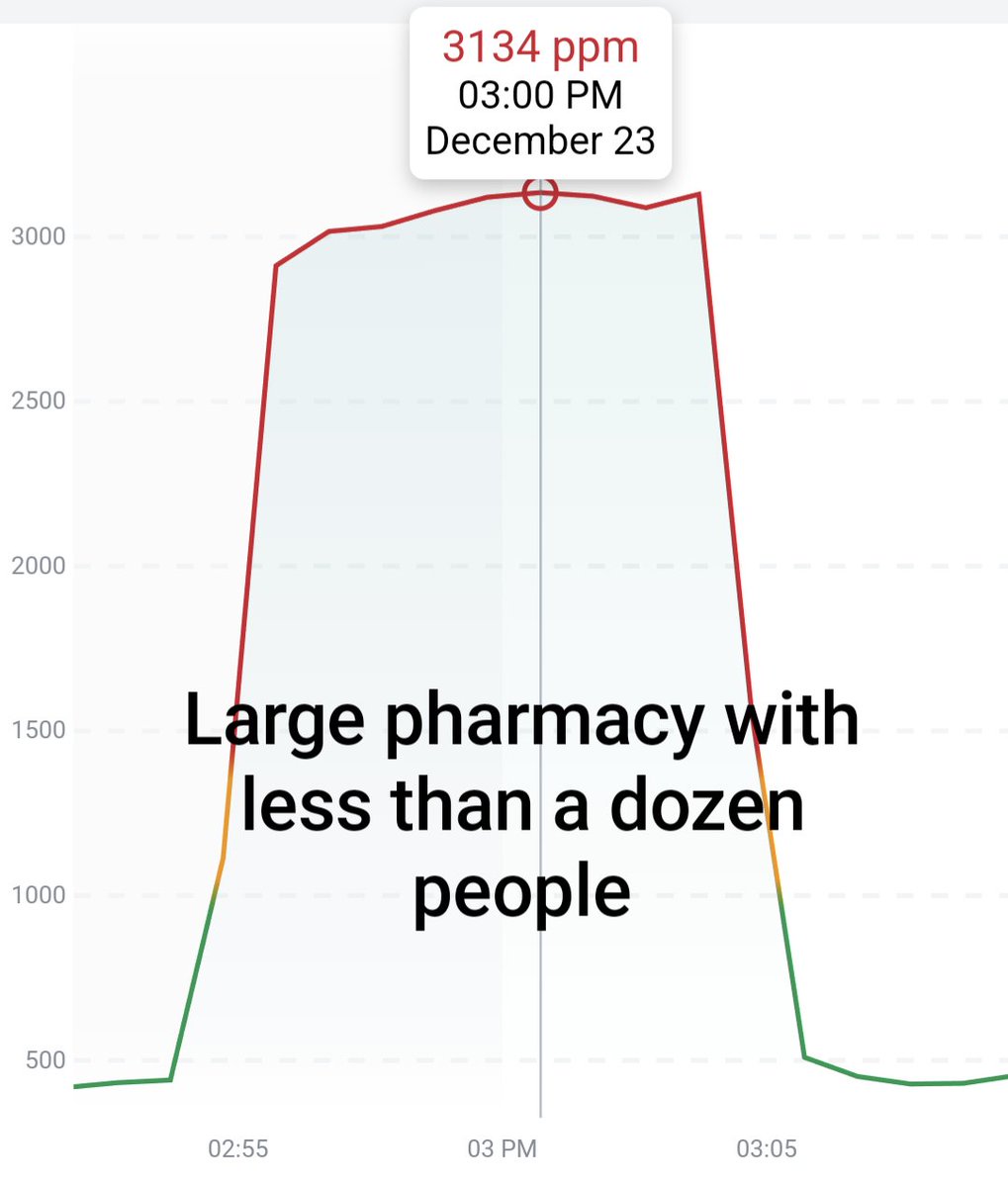
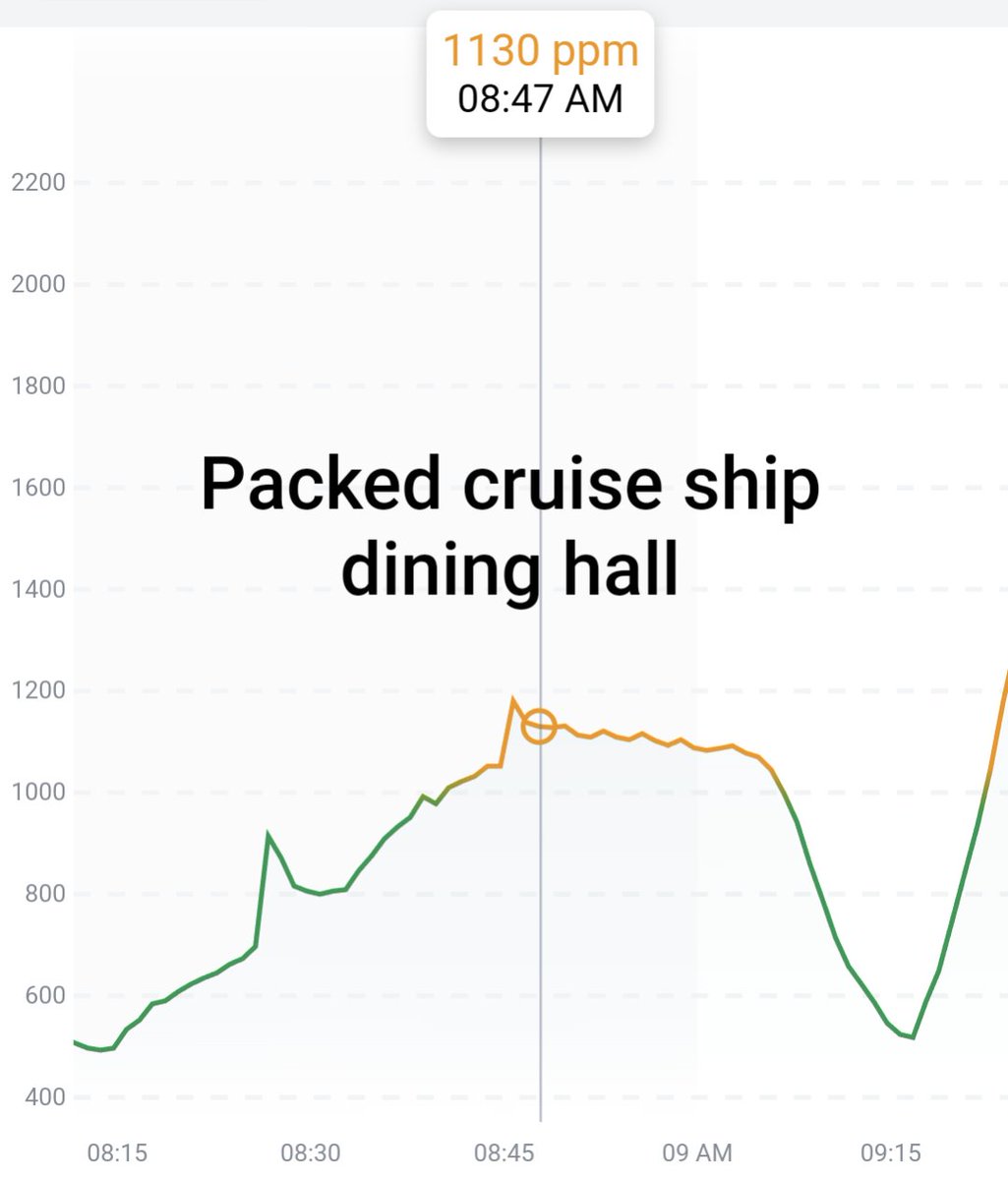
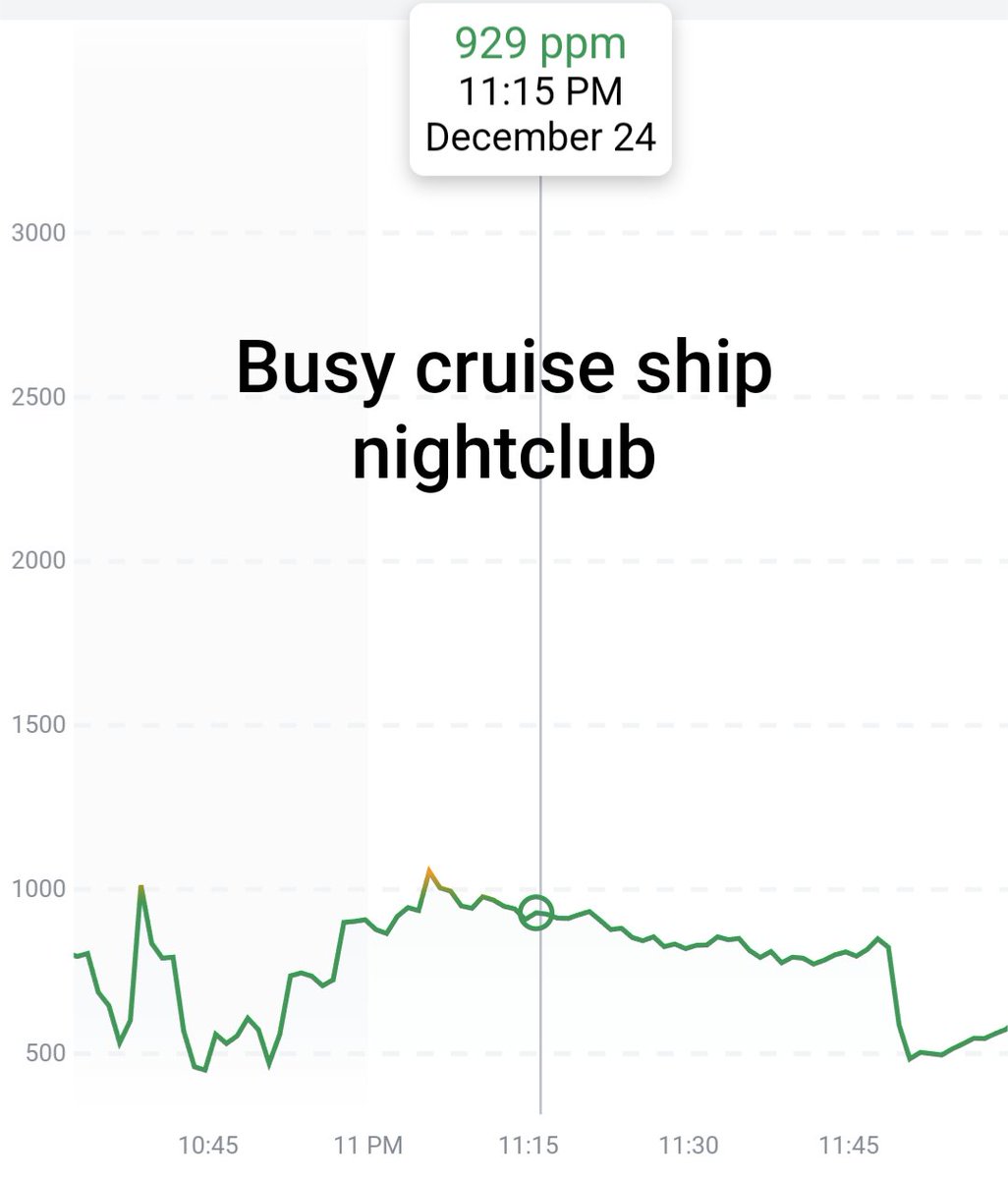
Is your intuition for which indoor spaced are safest from respiratory disease any better than mine?
Because I’ve tested vehicle AC systems before, I figured the minibus would still be bad, even if mostly empty. But 2500ppm is still surprisingly bad!
BTW slow ramp down must be because sensor was buried in my bag.
But the pharmacy looked big, airy and mostly empty to me so I didn’t initially think to wear a mask. But whoa 3000ppm, I guess that’s efficient recirculating AC for you!
Given how packed it was, I expected the dining hall to be terrible, but it was only just poor around 1000ppm.
Our room has also generally been around 800ppm so these ships have done something right with their HVAC!
The nightclub was the biggest surprise. It felt packed with people, yet was consistently below 1000ppm so I felt OK having a drink without a mask on.
Each of us has to choose how to balance physical health with mental health, but being informed by data can help!

Remember all the debates about pandemic precautions vs. economic harm? With nearly 4 years of data, we should be able to quantify this accurately, right?
Here’s my best guess at score cards. Anyone have better data?
https://ourworldindata.org/grapher/real-gdp-growth
https://ourworldindata.org/grapher/cumulative-excess-deaths-per-million-covid
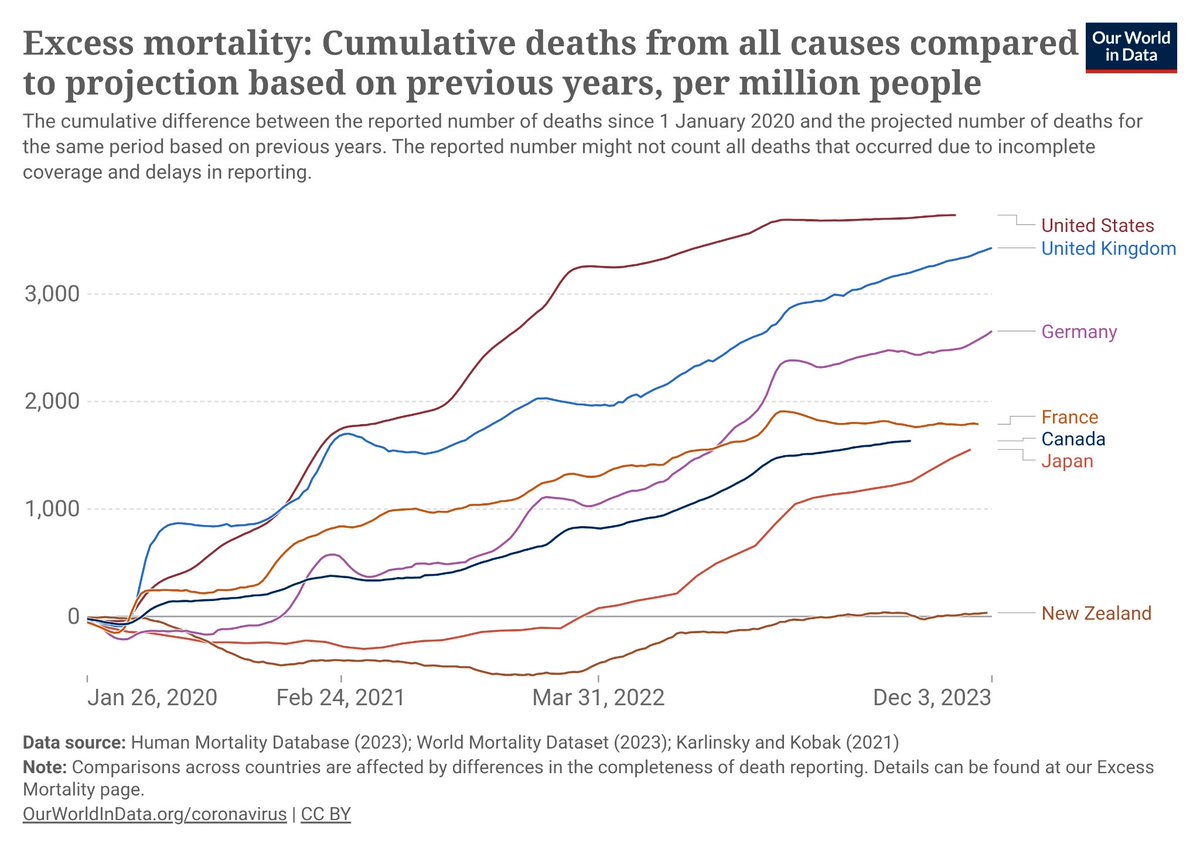
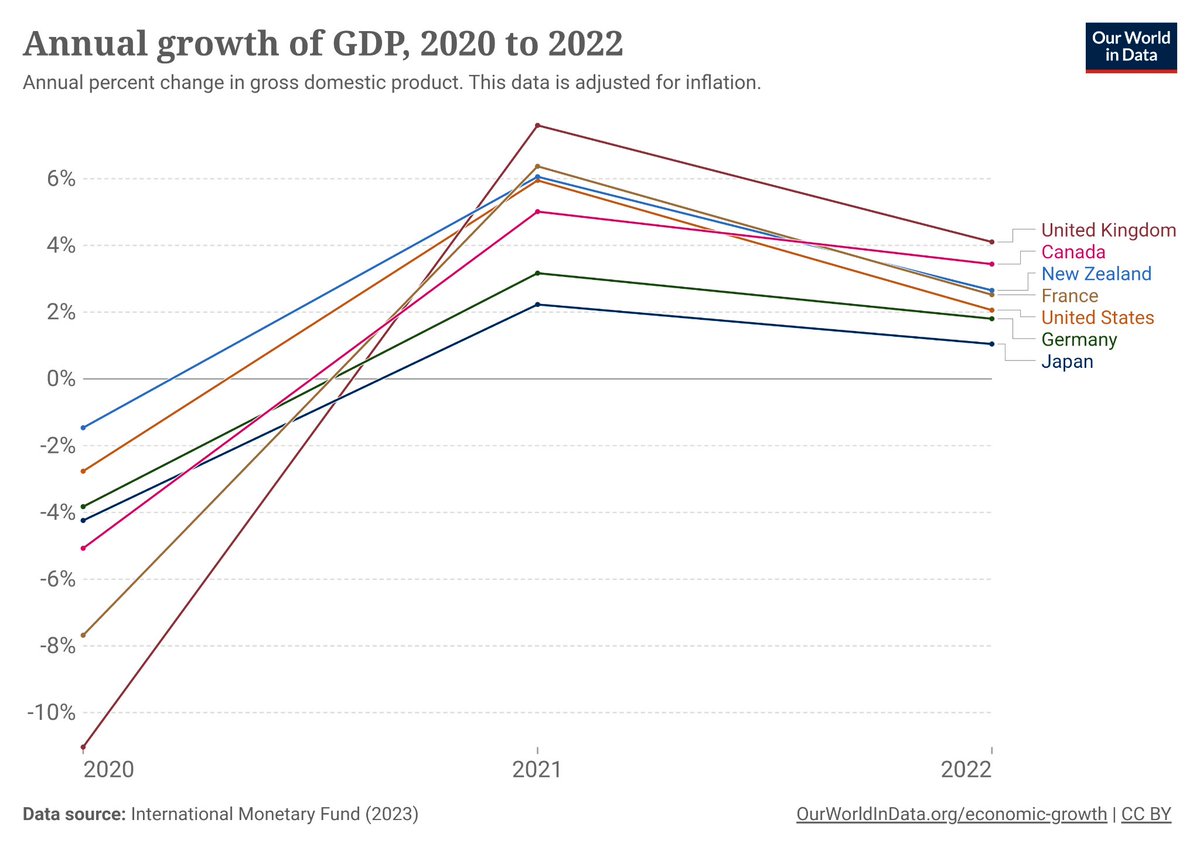
We’re 4 years into a public health experiment with 7 billion participants. It would probably be wise to spend some effort trying to understand the results!
6-way RATs available in Asia for about $1.50 ea! Countries with more pragmatic regulations than US/Canada will just keep seeing more innovation here.
Maybe they can just cram 20 targets into a strip by drawing a letter (instead of just a line) for each target? https://x.com/SaruulbilegE/status/1741017250524729557