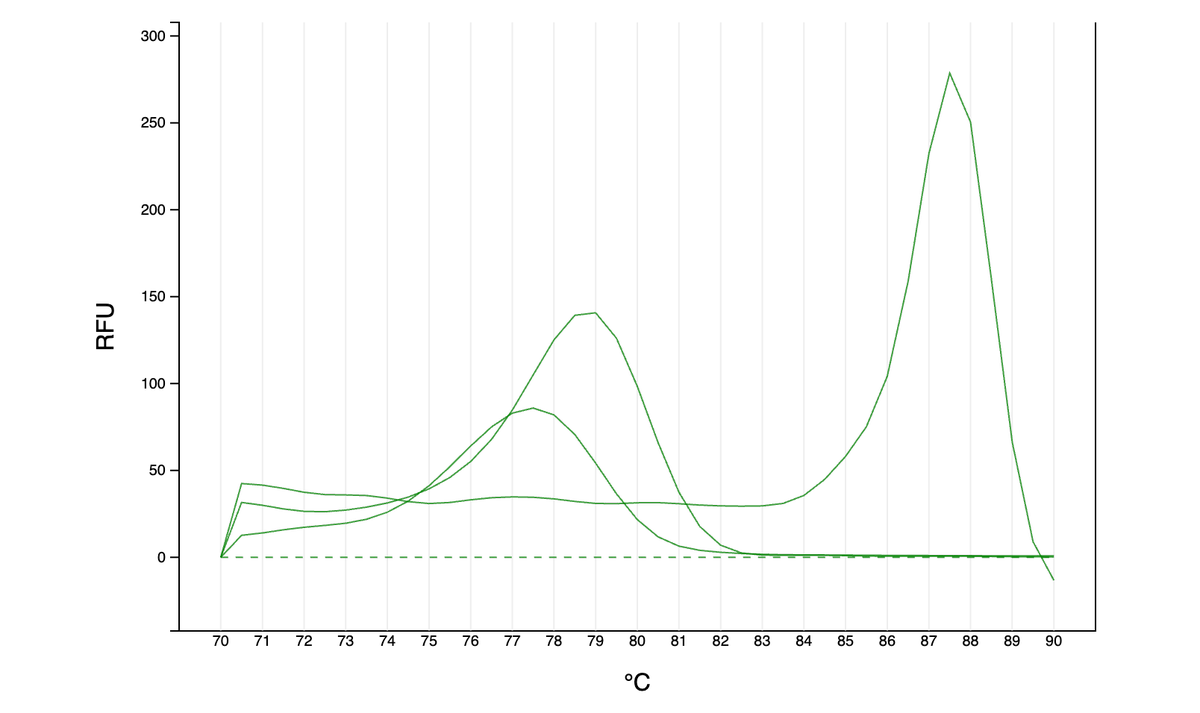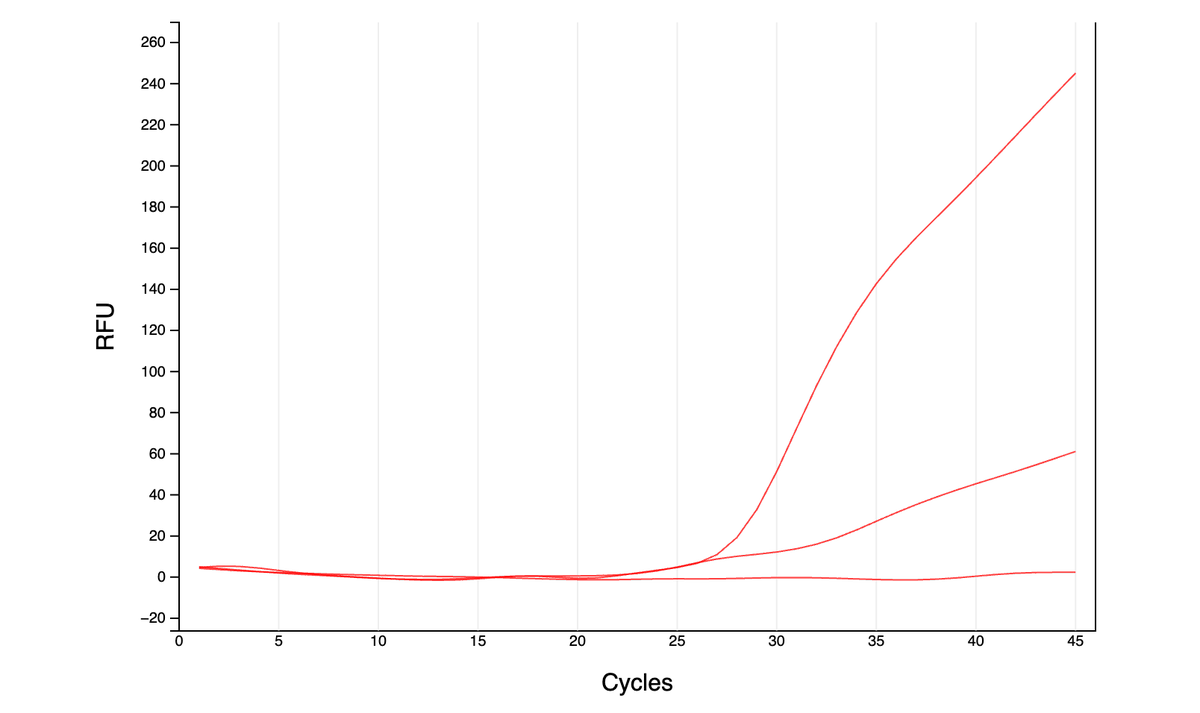
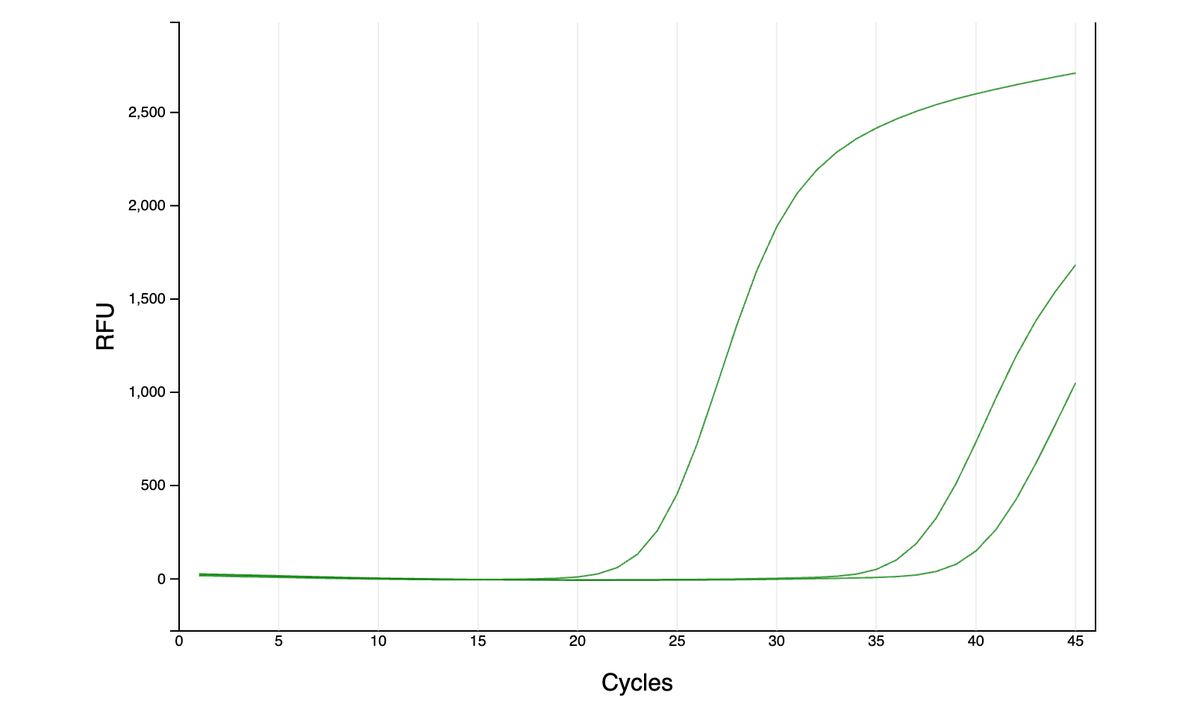
As far as I can tell from the literature, qPCR is generally done either with dye (quantify all amplified DNA and it’s melting temp - green graphs here) or with more precise TaqMan probes (detect a specific region of amplified DNA - red graph). However, …
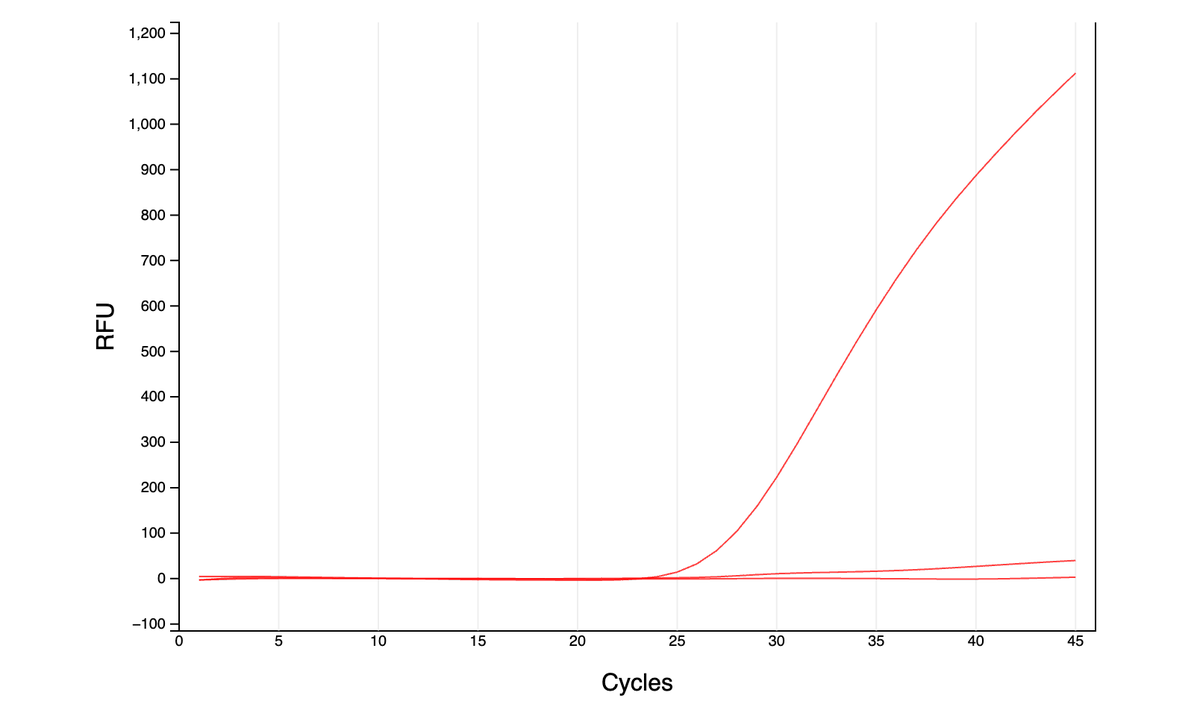
Lately I’ve been finding it really useful during assay design and optimization to use both in the same tube. Green dye with a red probe. While probes are crucial to accuracy, dye and melting-curve plots can help explain PCR failures. Eg. this probe plot looks a little funny:

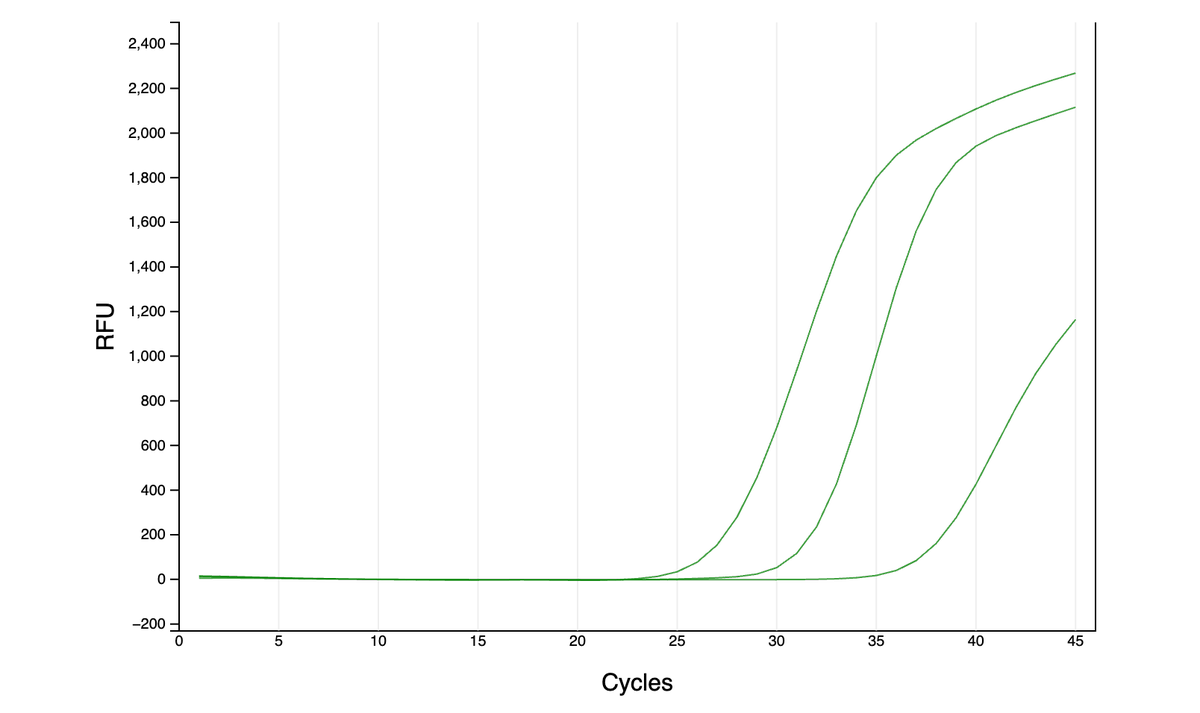
And the dye amplification plot suggests maybe I have two positives and a negative:

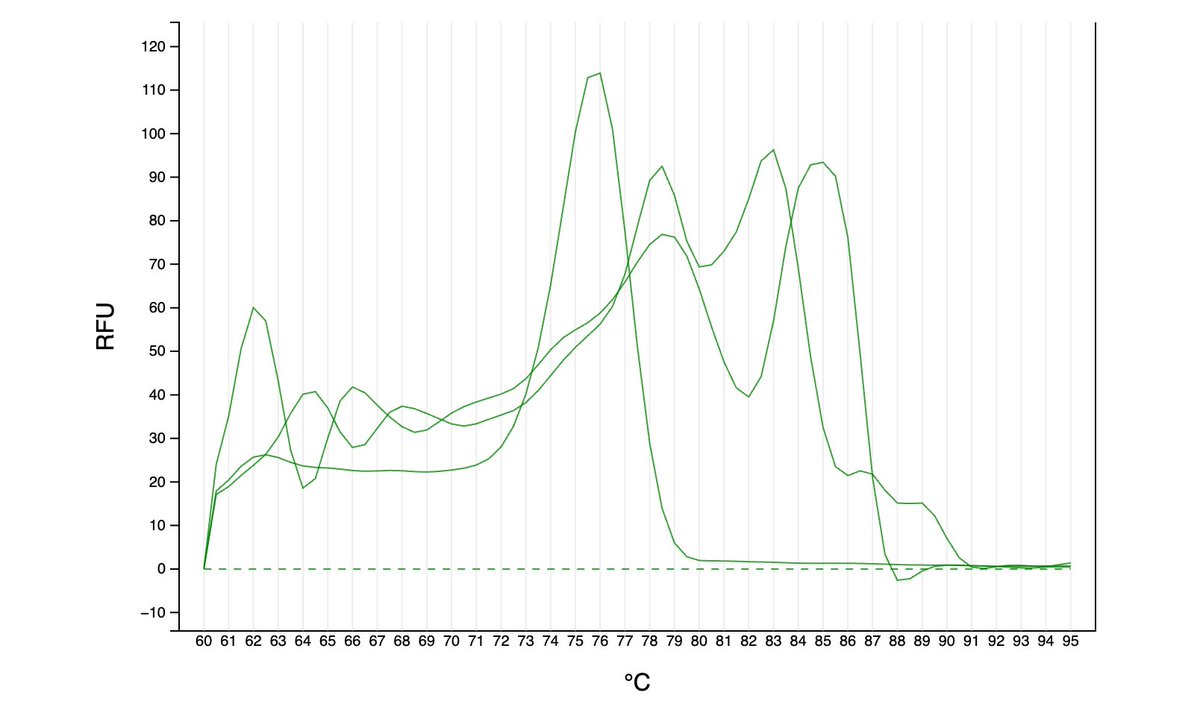
But the melting-point plot for the dye makes it clear that I’ve got some crazy non-specific amplification going on in my first two wells (and a negative - just primer-dimers - in my 3rd).

Am I the only one who finds using both simultaneously useful? Is it just that I’m terrible at PCR and real scientists don’t need to troubleshoot to the same degree? Or maybe they troubleshoot as much as I do but never write about it? 🙂

I started this because I ran out of probe master mix and decided to try using the 2-year old (and long-expired) dye master mix I still had in my freezer before ordering more. 😁